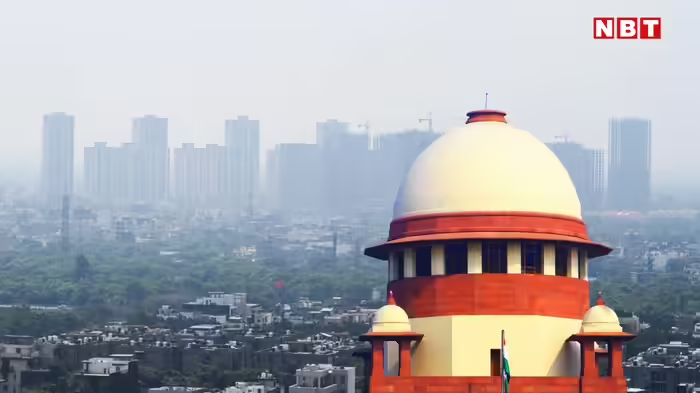
The mystery surrounding Delhi-NCR’s persistently poor air quality has been substantially clarified. The Commission for Air Quality Management (CAQM) has informed the Supreme Court that vehicular emissions and dust are the two primary contributors to air pollution in the National Capital Region, making it a serious problem during both winter and summer months.
CAQM, the apex statutory body tasked with addressing air quality issues in the NCR, presented its findings before the country’s top court on Wednesday, along with a set of short-term and long-term recommendations aimed at achieving sustainable improvement in air quality.
Vehicles and Dust Named as Main Offenders
Air pollution in Delhi-NCR has long been attributed to multiple factors, with fireworks during Diwali often singled out as the chief cause by several public figures. However, citing a report, CAQM clearly told the Supreme Court that emissions from vehicles and dust suspended in the atmosphere are the biggest culprits behind the region’s deteriorating air quality.
This submission contrasts with claims made by some, including former Union minister Maneka Gandhi, who had recently downplayed the role of vehicular pollution. CAQM’s assessment underscores that year-round sources, rather than episodic events, are driving the crisis.
Recommendations for Immediate and Long-Term Action
Along with identifying the causes, CAQM submitted a detailed list of proposed remedial measures. These include both short-term interventions and long-term structural reforms. Among the key recommendations is a proposal to relocate Municipal Corporation of Delhi (MCD) toll plazas that often cause traffic congestion, leading to higher vehicle emissions due to prolonged idling.
The commission emphasized that tackling dust pollution—emanating from roads, construction activities, and open areas—must be prioritized alongside curbing vehicular emissions.
Supreme Court Seeks Action Plan Within Four Weeks
A Supreme Court bench headed by Chief Justice of India Justice Suryakant, along with Justice Joymalya Bagchi and Justice Vipul M. Pancholi, directed all stakeholders not to raise objections to the CAQM recommendations at this stage. The bench asked the central government, the governments of Delhi, Uttar Pradesh, Haryana, and Rajasthan, as well as municipal bodies including the MCD, to submit a comprehensive action plan within four weeks.
Experts Involved in Framing Solutions
Additional Solicitor General Aishwarya Bhati informed the court that CAQM’s recommendations were formulated with inputs from leading experts, including specialists from IITs, major academic institutions, research organisations, and non-governmental bodies.
CAQM stressed that effective control of air pollution in Delhi-NCR would require coordinated efforts among ministries, state governments, statutory authorities, and civic agencies. “This is a challenge that can only be addressed through collective responsibility and seamless coordination,” the commission told the court.
The Supreme Court’s directive marks a crucial step toward holding authorities accountable, as the focus now shifts from identifying causes to implementing concrete, time-bound solutions to clean up Delhi-NCR’s air.
Discover more from SD NEWS agency
Subscribe to get the latest posts sent to your email.