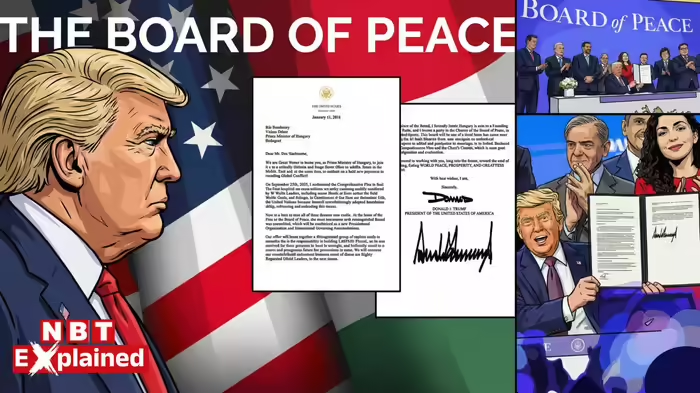
The United States recently invited India to join its Gaza Peace Board, a new initiative led by former President Donald Trump aimed at post-conflict reconstruction in Gaza. While seven countries, including Saudi Arabia, Turkey, and Egypt, have agreed to participate alongside Israel, India has yet to accept or decline the invitation. Experts advise caution, citing several strategic concerns.
Why India Should Stay Out
1. Support for Two-State Solution: India has consistently backed a two-state solution and avoids third-party mediation in Israel-Palestine or India-Pakistan issues. Participation could contradict its long-standing diplomatic stance.
2. Diplomatic Dilemma: India maintains balanced relations with both Israel and Palestine. Any action under the board could create a diplomatic conflict with one or both parties.
3. Financial Commitment: Joining the board reportedly requires a $1 billion contribution. Experts argue that peace initiatives should not involve such financial obligations, as it could primarily benefit the U.S. rather than the region.
4. Trump as Lifelong Chair: Reports suggest that Donald Trump will remain the board’s lifetime chairman, even after leaving office. Experts warn that this could compromise the board’s neutrality and effectiveness, making it inappropriate for a sovereign nation like India to participate under the leadership of a single individual.
5. Presence of Adversarial Countries: The board includes countries historically opposed to India, such as Pakistan and Turkey. Participation could weaken India’s global efforts to combat terrorism and expose anti-India agendas in multilateral forums.
Current Status: While France, China, and the UK have opted not to join, India is carefully evaluating the proposal. Analysts suggest that staying away aligns with India’s strategic autonomy and foreign policy principles.
Discover more from SD NEWS agency
Subscribe to get the latest posts sent to your email.