New Delhi: In a major breakthrough in India’s campaign to eliminate Left-Wing Extremism, four senior leaders of the banned Communist Party of India (Maoist) — including top commander Devji alias Tippiri Thirupathi — surrendered before Telangana Director General of Police B. Shivdhar Reddy on Tuesday.
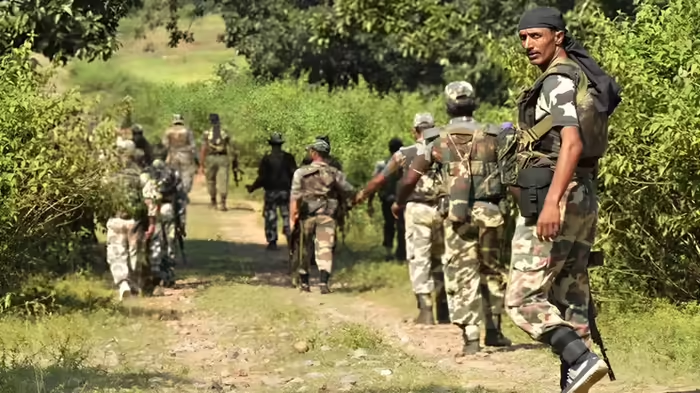
Union Home Minister Amit Shah, addressing CRPF personnel during the 87th Raising Day parade in Guwahati, reiterated the Centre’s resolve to eradicate Naxalism by March 31. He praised the Central Reserve Police Force and its elite CoBRA battalions for their “unparalleled service” and sustained efforts to make India Naxal-free.
Four Senior Leaders Lay Down Arms
The surrendered leaders include:
- Devji alias Tippiri Thirupathi (62)
- Murali alias Sangram (76)
- Bada Chokka Rao alias Damodar alias Jagan
- Noone Narasimha Reddy alias Narasimha
According to police sources, Devji and Sangram had established contact with Telangana Police on February 21, leading to their formal surrender. Officials indicated that nearly 50 more Maoist cadres are in touch with authorities and may soon follow suit, preferring surrender over armed confrontation.
Telangana DGP Shivdhar Reddy confirmed that Devji had never been arrested during his 44 years underground. He was considered one of the most influential figures within the Maoist hierarchy and was reportedly set to be appointed secretary of the party’s politburo central committee — a meeting that ultimately never took place. Despite this, he functioned as part of the organization’s top command.
In a symbolic gesture, the surrendered leaders were seated on stage alongside senior police officials, including Additional DGP Vijay Kumar and IG Sumathi, underscoring the government’s rehabilitation-focused approach.
Health Concerns and Return to Mainstream
Police officials cited Devji’s deteriorating health as a key factor behind his decision to surrender. In his statement, Devji said he had chosen to abandon underground life and rejoin mainstream society. He expressed his intention to work within the legal framework to address public grievances, signaling what observers describe as the beginning of a new political chapter in his life.
Devji joined the Maoist movement decades ago and rose steadily through its ranks. He was promoted to the central committee in 2002 and was made in-charge of the Central Military Commission (CMC) in 2026.
His wife, Arike Jaini alias Srujana, whom he married in 1991, was also a Maoist member. She was killed in a police encounter in Maharashtra’s Gadchiroli district in 2020.
A Historic Turning Point
Officials emphasized the significance of the development. IG Sundarraj Pattilingam of Bastar Range, Chhattisgarh, described the surrender of senior Maoist leaders as a “historic and decisive moment” in the effort to end Left-Wing Extremism in India.
Sangram had reportedly been underground for 46 years, while Chokka Rao and Narasimha had spent 28 and 36 years respectively in insurgency.
Security agencies believe the surrender of these high-ranking leaders could trigger a domino effect within Maoist ranks, accelerating the decline of insurgent operations in key regions.
With the government intensifying both security operations and rehabilitation initiatives, Tuesday’s surrender is being viewed as a major stride toward the Centre’s ambitious target of making the country free from Naxal violence by the end of March.
Discover more from SD NEWS agency
Subscribe to get the latest posts sent to your email.