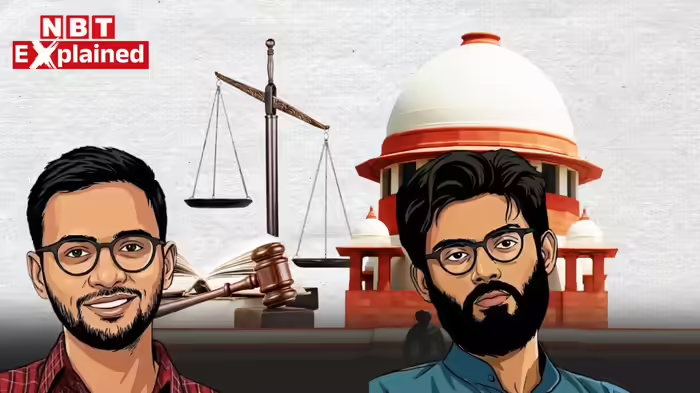
The Supreme Court on Monday refused to grant bail to Umar Khalid and Sharjeel Imam, accused in the alleged larger conspiracy behind the 2020 Delhi riots, while significantly expanding the interpretation of the Unlawful Activities (Prevention) Act (UAPA). The court held that acts threatening the economy or disrupting essential services can also fall within the ambit of “terrorist acts”, even if they do not involve direct physical violence.
A bench comprising Justice Aravind Kumar and Justice N.V. Anjaria dismissed the bail pleas of Khalid and Imam, observing that the prosecution material establishes a prima facie case against them. However, the bench granted bail to five other accused—Gulfisha Fatima, Meeran Haider, Shifa-ur-Rehman, Shadab Ahmed, and Mohammad Salim Khan—stating that each bail plea must be assessed individually, as all accused do not stand on the same footing.
‘Qualitatively Different Role’
The court noted that Umar Khalid and Sharjeel Imam are “qualitatively different” from the other accused. According to the bench, the material on record indicates their involvement at a level beyond local acts, pointing towards planning, mobilisation, and strategic direction of the alleged conspiracy.
The Supreme Court ruled that both accused may reapply for bail after one year or after the examination of protected witnesses, whichever is earlier.
Delay in Trial Not a ‘Trump Card’
Rejecting arguments based on prolonged incarceration, the court clarified that under Section 43D(5) of the UAPA, delay in trial cannot automatically override statutory restrictions on bail. Justice Aravind Kumar observed that prolonged custody does not, by itself, nullify the legal bar imposed by the UAPA.
The bench further held that while courts are permitted to conduct a prima facie judicial review at the bail stage, such scrutiny must remain accused-specific, and defence arguments should not be examined in detail at this stage.
Expanded Interpretation of Section 15
In a crucial observation, the Supreme Court broadened the interpretation of Section 15 of the UAPA, which defines terrorist acts. The court held that the provision cannot be narrowly confined to overt acts of violence alone.
“Apart from death or destruction, acts that disrupt essential services or threaten the economic security of the nation also fall within the scope of terrorist acts,” the bench observed.
This interpretation significantly widens the legal scope of UAPA, reinforcing the state’s authority to prosecute acts deemed detrimental to national security and economic stability.
Bail Denial Justified at This Stage
While acknowledging that the accused have spent a considerable period in custody, the court ruled that continued detention does not, at present, violate constitutional safeguards under Article 21. The bench concluded that the statutory bar under UAPA applies in this case and that granting bail at this stage would be inappropriate.
The Supreme Court emphasized that it is satisfied, based on the prosecution’s material, that prima facie charges stand established against Umar Khalid and Sharjeel Imam, and therefore, their release on bail cannot be justified at this point in the proceedings.
The verdict marks a significant development in UAPA jurisprudence, reinforcing stricter bail standards and expanding the legal understanding of what constitutes violence and terrorism under Indian law.
Discover more from SD NEWS agency
Subscribe to get the latest posts sent to your email.