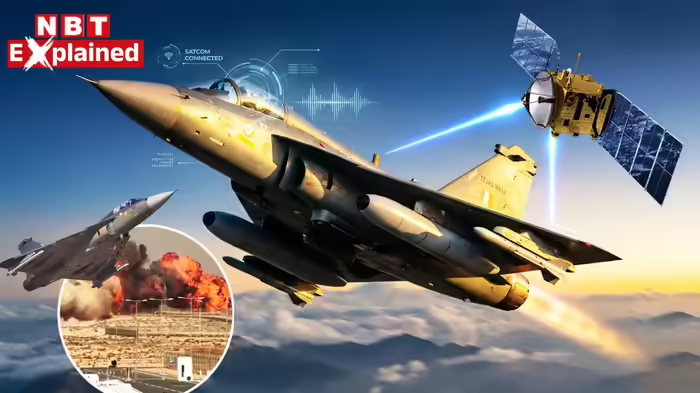
India is upgrading its indigenous Tejas MK1 light combat aircraft, equipping them with features similar to the advanced Tejas MK1A. The upgraded jets are designed to jam enemy radar mid-air, inflict damage, and return safely to base.
Tejas MK1A: Key Features
The Tejas MK1A is a significant leap over the MK1, featuring:
- Advanced AESA radar
- Electronic warfare (EW) suite
- Indigenous weapons systems
- Onboard Oxygen Generation System (OBOGS)
- Air-to-air refueling capability
These enhancements will meet the operational requirements of the Indian Air Force (IAF).
Upgrading Tejas MK1 Fleet
Until the MK1A fleet is fully inducted, existing MK1 jets are being upgraded with EM pods, software-defined radios (SDR), and SATCOM capabilities.
- EW Pods: External pods that use the electromagnetic spectrum to confuse or disable enemy radar and weapon systems, increasing survivability in hostile environments.
- SDR: Flexible communication systems that process, modulate, and decode signals via software, allowing secure, high-speed, interoperable communication across multiple frequencies.
- SATCOM: Satellite communication systems enabling voice, data, and video transmission across remote areas where terrestrial infrastructure is unavailable.
Current Fleet and Upgrades
The IAF’s Second Squadron currently operates 16 Tejas MK1 FOC aircraft equipped with older ELM-2032 radar and avionics, sufficient for training and operational needs. Upgrades aim to bring them closer to MK1A standards with improved EW systems, pod-based jamming, and advanced avionics architecture.
Future Plans for Tejas MK1A
The IAF has already procured 73 single-seat and 10 dual-seat Tejas MK1A jets under a 2021 contract, with 97 more single-seat aircraft recently ordered. The full fleet is expected to be delivered by 2032.
Replacing Lost Jets
The move comes after two Tejas MK1 aircraft were lost in accidents within two years—one in 2024 and another at the 2025 Dubai Airshow—despite being in service for only three to four years. While no immediate replacement is planned, these upgrades ensure that the MK1 fleet remains combat-ready until the MK1A jets are fully operational.
Discover more from SD NEWS agency
Subscribe to get the latest posts sent to your email.