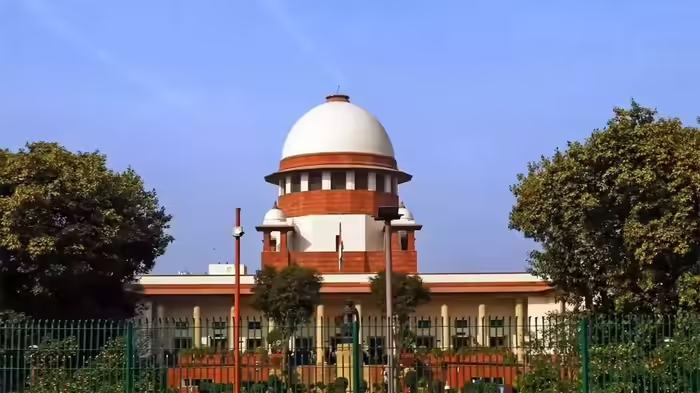
New Delhi: The Supreme Court is set to pronounce its verdict today on whether Harish Rana, a resident of Ghaziabad, Uttar Pradesh, who has been in a coma for nearly 13 years, can be allowed passive euthanasia. The decision comes after a grave medical report from AIIMS confirmed the seriousness of his condition, prompting his parents to request mercy killing.
Harish Rana has been bedridden and unconscious since 2013, when he suffered severe head injuries after falling from the fourth floor of his hostel in Chandigarh. Over the years, the prolonged immobility has caused multiple bedsores, and his medical reports indicate no possibility of recovery.
The Supreme Court had met Harish’s parents on 13 January before issuing any order. His parents, having lost hope of his recovery, formally requested passive euthanasia for their son. Earlier hearings saw the court directing AIIMS to submit a detailed medical report on Harish’s condition. Upon reviewing the report on 18 December, a bench comprising Justices Pardiwala and KV Viswanathan expressed deep concern and described the findings as “extremely distressing.”
Justice Pardiwala remarked, “This is a very sad report. It is a difficult decision for us, but we cannot let this young man continue to suffer in unbearable pain. We are now at a stage where we must take a final decision today.”
The court has asked AIIMS to provide copies of the report to Additional Solicitor General Aishwarya Bhati and Harish’s lawyers, Rashmi Nandkumar, and instructed them to discuss the matter with the family before the final judgment. Prior to AIIMS, the court had also obtained a report from the Ghaziabad District Hospital, which similarly indicated that Harish’s condition is critical with no hope of recovery.
What is Passive Euthanasia?
Passive euthanasia involves withdrawing medical treatment that sustains life. The process requires approval from primary and secondary medical boards. If discrepancies arise between the reports, the case is referred to the court. The court may then constitute an independent committee of three doctors with at least 20 years of experience in critical care to review the matter before any decision is taken.
Harish’s case is being closely watched nationwide, as it touches on the sensitive intersection of ethics, medical science, and the right to die with dignity.
Discover more from SD NEWS agency
Subscribe to get the latest posts sent to your email.