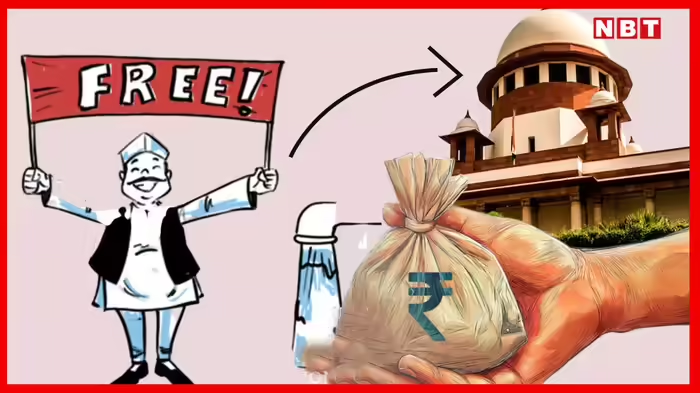
New Delhi, February 19, 2026: The Supreme Court expressed strong concern over the proliferation of free schemes in India, warning that such policies could undermine economic growth and create a culture of dependency. During Thursday’s hearing, a bench led by Chief Justice Suryakant questioned the logic of providing free electricity, food, and other benefits without distinguishing between those who can pay and those who cannot.
Bench Criticizes Blanket Freebies
The matter came up during a petition filed by Tamil Nadu Power Distribution Corporation Limited (TNPDC), which proposed supplying free electricity to all consumers, regardless of financial capacity. The bench, comprising CJI Suryakant, Justice Joymalya Bagchi, and Justice Vipul M. Pancholi, raised concerns about the financial prudence of such measures, noting that many states continue to offer free facilities despite operating in revenue deficits.
Court Warns of Economic Impact
CJI Suryakant remarked that indiscriminate distribution of freebies could hamper the country’s economic development. “It is understandable to support those unable to pay electricity charges under welfare schemes. But when free benefits are extended indiscriminately, it risks becoming a policy of appeasement,” the bench observed. The Court further questioned how the states’ revenue could be better utilized to generate employment and fund developmental projects rather than merely distributing free resources.
Focus on Employment and Development
Justice Bagchi highlighted that the issue is nationwide, not limited to a single state. The Court emphasized that planned expenditure should prioritize initiatives to reduce unemployment rather than expanding freebies. It pointed out that most states are running budget deficits yet continue to offer such schemes, which may compromise long-term growth and productivity.
A Question of Culture
Summing up, the Supreme Court asked, “What kind of culture are we developing in India? Providing for those genuinely in need is one thing, but indiscriminately distributing resources without knowing who can pay and who cannot—is this not a policy of political appeasement?” The bench urged states to adopt targeted, sustainable welfare measures instead of blanket free schemes.
Discover more from SD NEWS agency
Subscribe to get the latest posts sent to your email.