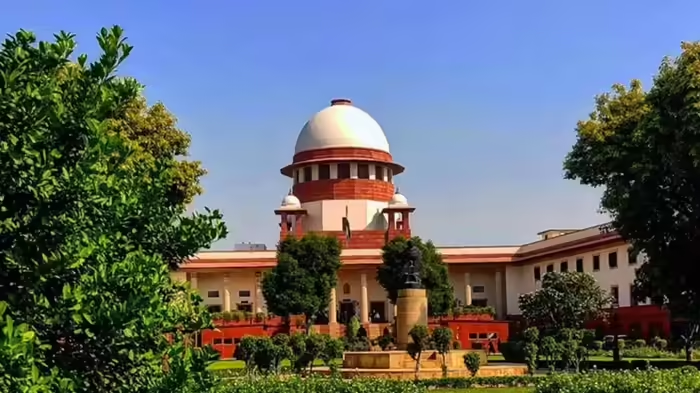
New Delhi: The Supreme Court has delivered a significant ruling regarding social media posts, upholding the guidelines laid down by the Telangana High Court. The apex court clarified that posting content on social media will not automatically lead to arrest.
Key Takeaways from the SC Ruling
The Supreme Court emphasized that police cannot register cases against individuals for critical, objectionable, or political posts on social media without verifying the validity of the complaint and conducting a preliminary investigation. This decision offers relief to those who express dissent or critique the government or ruling party online, safeguarding their fundamental rights.
According to the guidelines:
- Police must verify whether the complainant qualifies as a legally aggrieved party before registering a case.
- FIRs should only be filed after a preliminary investigation.
- Criminal law can be invoked only if the speech incites violence or poses a threat to public order.
Political Criticism and Satire Protected
Earlier, the Telangana High Court had quashed criminal cases filed against individuals for criticizing the state Congress government and the Chief Minister on social media. The court observed that such posts constituted political criticism and satire, not defamation or public disorder, and are fully protected under Article 19(1)(a) of the Constitution.
When Action Can Be Taken
The courts clarified that criminal cases cannot be filed merely on the basis of hostility, deliberate insult, public nuisance, threat to public order, or sedition, unless there is prima facie evidence of violence, hate speech, or public disorder. After reviewing the High Court’s orders and rules, the Supreme Court commended the Telangana High Court for its approach.
Guidelines Emphasize Proportionality
Senior advocate Siddharth Luthra highlighted the need to examine the rules given their wide-ranging implications. The court noted that the guidelines are comprehensive, stating that automatic or mechanical arrests are unacceptable, and proportionality must guide the use of criminal procedures.
This ruling marks a crucial step in protecting online freedom of expression and preventing misuse of the legal process against social media users.
Discover more from SD NEWS agency
Subscribe to get the latest posts sent to your email.