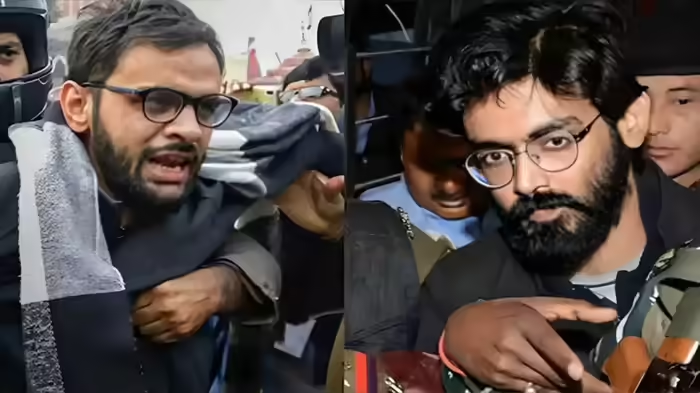
The Supreme Court of India has refused to grant bail to Umar Khalid and Sharjeel Imam in connection with the high-profile Delhi riots conspiracy case, while granting bail to five other accused. The apex court emphasized that the legal position of Khalid and Imam is “qualitatively different” from the other defendants.
Case Background
Khalid and Imam are accused under the Unlawful Activities (Prevention) Act (UAPA) in connection with the February 2020 Delhi riots, which left dozens dead and hundreds injured. The case alleges a premeditated conspiracy to incite violence. The other accused granted bail are Gulfisha Fatima, Miran Haider, Shifa-ur-Rehman, Shadab Ahmad, and Mohammad Salim Khan.
Supreme Court on Bail Applications
A bench comprising Justices Arvind Kumar and N.V. Anjaria stressed that each bail application must be examined independently, as all accused are not in an identical legal position. “The circumstances of Umar Khalid and Sharjeel Imam are distinct from the other five accused,” the court noted, rejecting their pleas.
The bench also clarified that while UAPA cases generally restrict pre-trial bail, the law does not automatically deny bail, nor does it limit the court’s discretion to grant it. The court observed that delays in trial could strengthen judicial scrutiny but are not in themselves grounds for bail.
Arguments from Accused and Police
The accused had highlighted prolonged pre-trial detention and the lack of immediate trial proceedings. Senior advocate Kapil Sibal, representing Khalid, argued that Khalid was not even present in Delhi when the riots occurred. Senior advocate Siddharth Dave, representing Imam, noted that the speeches cited by the prosecution were already subject to separate cases and that Imam has been in custody since January 2020, a month before the riots.
Delhi Police strongly opposed bail, asserting that the February 2020 riots were not spontaneous but a “well-planned, nationwide conspiracy” aimed at destabilizing the government and impacting the country’s economy. The police emphasized that prima facie evidence exists to substantiate the allegations against Khalid and Imam.
High Court Rejection
The Supreme Court’s decision follows a similar order by the Delhi High Court on September 2, which had also denied bail to all accused. The case has kept Khalid and Imam in custody for over five years, with serious charges under UAPA and related provisions.
Discover more from SD NEWS agency
Subscribe to get the latest posts sent to your email.