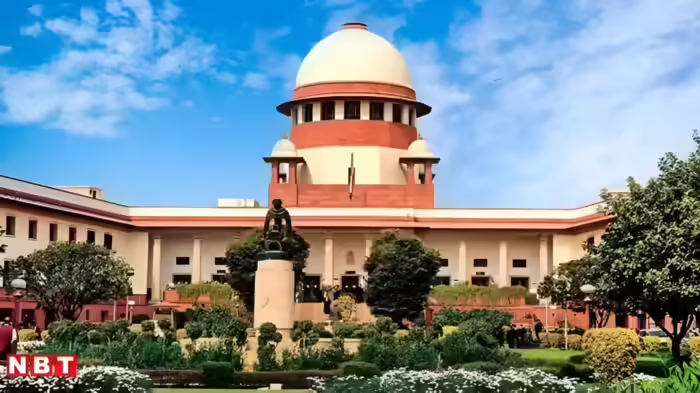
New Delhi: The Supreme Court on Tuesday raised critical questions about the role of speeches delivered by Sharjeel Imam in the alleged 2020 Delhi riots conspiracy case. The bench sought clarity on whether his speeches could be categorized as incitement or terrorist acts under the Unlawful Activities (Prevention) Act (UAPA).
The court is currently hearing bail petitions of Umar Khalid, Sharjeel Imam, Gulfisha Fatima, Miran Haider, Shifa-ur-Rehman, Mohammad Salim Khan, and Shadab Ahmed, which were previously rejected by the Delhi High Court on 2 September.
Bench Questions the Speeches
During the proceedings, the bench comprising Justices Arvind Kumar and N.V. Anjaria focused on Imam’s speeches, asking whether they could be separated from the definitions of incitement or terrorist acts under UAPA.
Content of the Speeches
The Delhi Police presented video clips of Imam’s speeches in court, which included statements such as “chicken neck band karne,” calls to separate Assam, and nationwide “chakka jam” (road blockades). Senior advocate Siddharth Dave, representing Imam, argued that his client is being labeled a ‘terrorist’ despite not being convicted of any crime.
Linking Imam to Riots Deemed Improper
Dave further argued that FIRs already exist based on the speeches, and Imam was arrested prior to the February 2020 riots. Therefore, connecting him directly to the riots is unjustified.
Prosecution Claims Rebutted
The prosecution contended that Imam’s speeches helped “set the stage” for the riots, forming part of the alleged conspiracy. The bench questioned this, noting that delivering a speech alone does not constitute a “terrorist act” under Section 15 of UAPA unless accompanied by concrete actions. Senior advocate Abhishek Manu Singhvi, representing social activist Gulfisha Fatima, added that the police’s claims regarding a “regime change operation” are not mentioned in the charge sheet.
The Supreme Court’s remarks indicate a careful scrutiny of evidence linking speeches to criminal liability, emphasizing that verbal expression alone cannot be automatically equated with terrorist intent.
Discover more from SD NEWS agency
Subscribe to get the latest posts sent to your email.