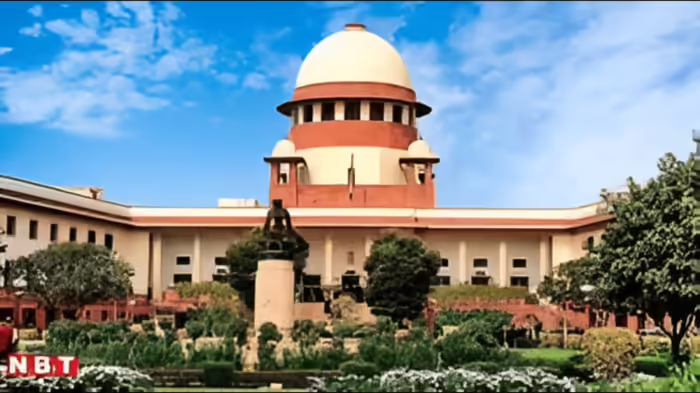
New Delhi, February 23, 2026: The Supreme Court of India has once again expressed concern over the growing trend of state governments announcing “freebies” just ahead of elections, raising fundamental questions about fiscal responsibility and democratic fairness.
During recent oral observations, the Court questioned how long the practice of declaring free schemes immediately before elections would continue. “Why are such schemes announced only when elections approach?” the Bench remarked, signaling unease over the timing and intent behind such measures.
Ongoing Legal Challenge
A petition filed in 2022 seeking regulation or prohibition of pre-election freebies is still awaiting final adjudication. The matter was recently mentioned again before the Court, which indicated that it is likely to be heard in March.
On February 19, 2026, a Bench led by the Chief Justice observed that even if a state has a revenue surplus, it must consider whether public funds should instead be directed toward infrastructure development such as roads, hospitals, and schools. The Court urged political parties and leaders to introspect on the long-term implications of such policies.
Earlier, on February 12, 2025, the Court had remarked that the culture of free distribution of rations and direct cash transfers may be affecting the incentive to work, reflecting broader concerns about economic sustainability.
Debate Over Constitutional and Policy Boundaries
The issue of freebies has been debated in the Court since 2022. On August 3, 2022, the Bench suggested the possibility of constituting an expert body to examine the matter and provide recommendations, noting that no political party openly discusses the fiscal consequences as most promise such benefits during campaigns.
On August 11, 2022, the then Chief Justice emphasized that the issue was serious and warranted public debate. Taxpayers, the Court noted, have a legitimate right to question the unchecked distribution of public funds.
At the heart of the controversy is the question: what qualifies as a “freebie”? Is free education or free water a welfare measure or an electoral inducement? The Court has acknowledged that the distinction is complex and requires careful consideration.
Related Petition Dismissed
In a separate but related development, the Supreme Court declined to entertain a plea by Jan Suraaj Party founder Prashant Kishor seeking fresh elections in the 2025 Bihar Assembly polls. In oral remarks, the Court questioned the electoral performance of the petitioner’s party and suggested that judicial forums cannot be used to compensate for political setbacks.
The plea, filed under Article 32 of the Constitution, had challenged the transfer of ₹10,000 to women voters during the enforcement of the Model Code of Conduct. The Court, however, refused to intervene.
The 2022 Petition and the Balaji Judgment
The primary petition against freebies was filed by advocate Ashwini Upadhyay, following which the Court issued notices to the Centre and the Election Commission on January 25, 2022. The matter has been mentioned multiple times for urgent listing.
The petitioner has also urged reconsideration of the 2013 ruling in the case of S. Subramaniam Balaji v. State of Tamil Nadu. In that judgment, the Supreme Court had held that promises made in election manifestos do not amount to “corrupt practices” under existing law.
With the debate over welfare versus fiscal prudence intensifying, the Supreme Court’s forthcoming hearing in March is expected to bring renewed focus to the legal and constitutional contours of election-time promises.
Discover more from SD NEWS agency
Subscribe to get the latest posts sent to your email.