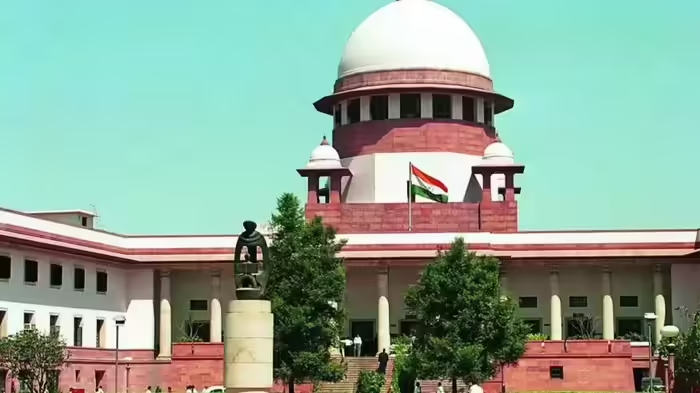
In a landmark ruling on Friday, the Supreme Court of India directed all states and Union Territories to provide free biodegradable sanitary napkins to girls in schools, citing menstrual hygiene as an essential part of the right to life and privacy under Article 21 of the Constitution. The judgment, delivered by Justices J.B. Pardiwala and R. Mahadevan, also mandates separate toilets for boys and girls in every school, including accessible facilities for differently-abled students.
Key directives of the Supreme Court
The Court emphasized that the provision of sanitary pads and clean toilet facilities is not merely a policy or charitable matter but a constitutional right crucial to the dignity, health, and equality of girls. It clarified that the rules apply to both government and private schools, warning that non-compliance—such as failing to provide free sanitary pads or separate toilets—could result in derecognition of the school.
Justice Pardiwala highlighted the practical importance of the ruling, stating that it is not just for those within the legal system but also for classrooms where girls hesitate to seek help and teachers wish to assist but lack resources. “Progress is measured by how well we protect the vulnerable,” he said.
Background of the case
The case was initiated following a shocking incident at Maharshi Dayanand University in Haryana, where three female sanitation workers were allegedly forced to submit photographic evidence of their sanitary pads during menstruation. The Supreme Court took suo motu cognizance last November after nationwide outrage against period-shaming.
The Supreme Court Bar Association (SCBA), which filed a petition, argued that such practices violate women’s constitutional rights to life, dignity, privacy, and bodily integrity, especially for female employees in unorganized sectors. The Court emphasized that girls and women must not face humiliation for biological functions and should have access to safe and supportive environments.
Impact on menstrual hygiene and education
The judgment underlines that lack of basic facilities and societal stigma around menstruation directly affect girls’ health, education, and privacy. The Court stated that if governments fail to provide adequate sanitary products or sanitation facilities, they will be held accountable. It also stressed alternative arrangements for women unable to perform heavy work due to menstrual pain, avoiding humiliating scrutiny.
This historic decision marks a major step in protecting menstrual hygiene as a fundamental right and ensuring safe, dignified educational spaces for girls across India.
Discover more from SD NEWS agency
Subscribe to get the latest posts sent to your email.