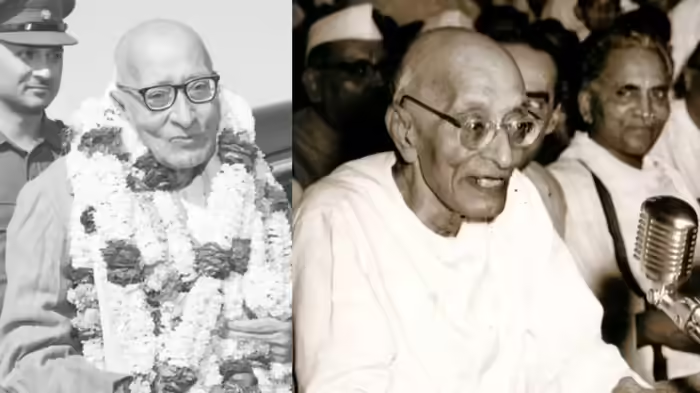
New Delhi, February 23, 2026: A statue of C. Rajagopalachari, the first and only Indian Governor-General of independent India, will be unveiled today in the central courtyard of Rashtrapati Bhavan as part of the ‘Rajaji Utsav’ celebrations. The announcement was made earlier by Prime Minister Narendra Modi during the 131st episode of his monthly radio address, Mann Ki Baat.
The statue will replace that of British architect Edwin Lutyens, marking what the government describes as a symbolic step toward shedding colonial-era imprints and honoring Indian icons of national importance.
PM Modi Highlights ‘Freedom from Colonial Mindset’
In his address, Prime Minister Modi recalled his call for “Panch-Pran” during the Azadi Ka Amrit Mahotsav celebrations, emphasizing the need to free the nation from remnants of colonial mentality.
He noted that while statues of British administrators continued to occupy prominent spaces even after Independence, national leaders and freedom fighters did not receive similar recognition. The installation of Rajagopalachari’s statue, he said, reflects a conscious effort to correct that historical imbalance.
The Prime Minister described Rajagopalachari as a statesman who viewed power not as a position of authority but as an opportunity for service. He praised Rajaji’s integrity, restraint, and independent thinking, calling them enduring sources of inspiration.
Who Was C. Rajagopalachari?
Chakravarti Rajagopalachari, popularly known as “Rajaji,” was born on December 10, 1878, in the Madras Presidency. A distinguished lawyer and intellectual, he gave up his legal career to join the freedom struggle under the banner of the Indian National Congress.
He actively participated in major movements against British rule, including protests against the Rowlatt Act, the Non-Cooperation Movement, and the Civil Disobedience Movement. A close associate and confidant of Mahatma Gandhi, Rajaji was also related to him by marriage.
On August 15, 1947, Rajagopalachari became the first Indian and the last Governor-General of India, serving until the post was abolished when India became a Republic in 1950. He was also the first Governor of West Bengal after Partition (1947–48) and later served in key constitutional roles.
Rajaji was elected to the Constituent Assembly from Madras and was a member of the sub-committee on minorities. In recognition of his immense contribution to the nation, he was awarded the Bharat Ratna in 1954.
Exhibition to Run Until March 1
As part of the Rajaji Utsav, a special exhibition dedicated to his life and legacy will be open to the public from February 24 to March 1 within the Rashtrapati Bhavan complex. Citizens have been encouraged to visit and learn more about the statesman whose political and moral leadership helped shape early independent India.
The unveiling ceremony is expected to underscore the government’s broader effort to highlight Indian historical figures in national spaces while reinterpreting the legacy of colonial-era symbols.
Discover more from SD NEWS agency
Subscribe to get the latest posts sent to your email.