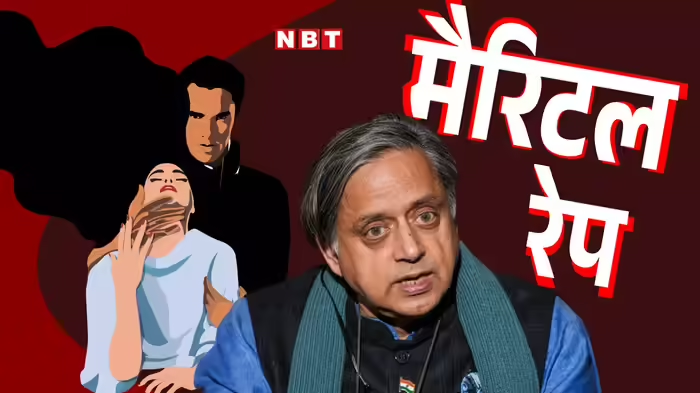
New Delhi: Congress MP Shashi Tharoor has reignited the debate over marital rape in India, advocating for a dedicated law to address this issue. Speaking at an event in Kolkata, Tharoor emphasized that marital rape is not an act of love but a form of violence against women. He expressed concern over the lack of legal recognition for such cases in India, despite the country having stringent laws against rape.
‘Marital Rape is Violence, Not Marital Love’
Tharoor highlighted India’s unusual stance, saying, “It is surprising that India remains one of the few democracies where non-consensual sexual acts by a husband against his wife are not treated with the seriousness they deserve.” He questioned why husbands are given immunity and stressed, “If a spouse disrespects their partner and engages in sexual acts without consent, citing marriage as a justification, it is a violation of law and an act of violence against women.”
The Need for Legal Reform
The senior Congress leader called for a specific law to curb such abuses. “There is a pressing need for legislation against domestic rape in India. Unfortunately, even women ministers holding key portfolios have not given this issue the attention it deserves. This is not marital love—it is violence,” he said, urging society to stand up for women’s rights.
What is Marital Rape?
Marital rape refers to non-consensual sexual activity between spouses. While it is criminalized in around 77 countries worldwide, India does not currently recognize marital rape as a criminal offense. Globally, 34 countries provide husbands with legal immunity in such cases.
Legal Status in India
Although marital rape is not a criminal offense in India, certain situations—such as forced sexual acts when spouses live separately—may be punishable under law. The Indian Penal Code (IPC) provides immunity to husbands in most marital rape cases. The legal age for consensual sexual relations has been raised from 15 to 18. Victims of non-consensual acts may seek relief under the Protection of Women from Domestic Violence Act, 2005, which covers sexual harassment, humiliation, and dignity violations. In a Supreme Court case, the Union Home Ministry argued that while a husband cannot violate his wife’s consent, labeling such acts as “rape” might be excessive and legally problematic.
Arguments Against Criminalization
Opponents of criminalizing marital rape in India argue that it could destabilize the institution of marriage. They maintain that existing laws, including domestic violence provisions, are sufficient, and that criminalization might be misused in divorce proceedings. They also argue that marriage inherently involves sexual relations, making legal regulation complex. According to the government, this matter falls within the legislative domain and must be addressed by Parliament, not the judiciary.
Discover more from SD NEWS agency
Subscribe to get the latest posts sent to your email.