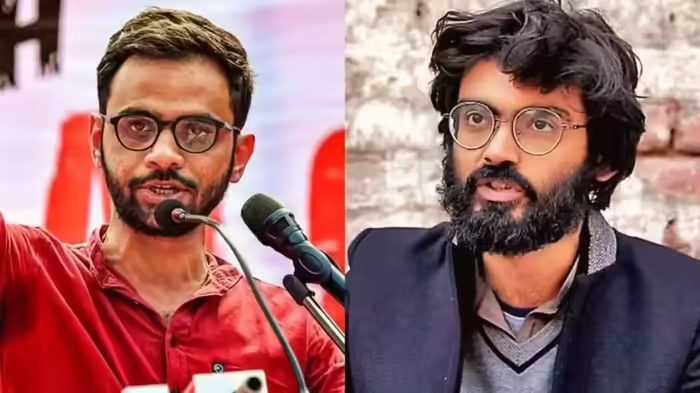
The Supreme Court has rejected the bail petitions of Delhi riots accused Umar Khalid and Sharjeel Imam, citing prima facie evidence against them and highlighting concerns over national security and public order. Meanwhile, five other accused have been granted bail under 12 strict conditions.
Key Details of the Supreme Court Decision
The verdict, delivered by Justices Arvind Kumar and N.V. Anjaria, stipulates that Khalid and Imam cannot file another bail petition in this matter for one year. However, if the trial proceedings or witness testimonies are not completed within that period, they may approach a lower court for bail.
The bench granted bail to five other accused—Gulfisha Fatima, Miran Haider, Shifa-ur-Rehman, Mohammad Salim Khan, and Shadab Ahmad—citing that continued detention was not necessary for them.
Supreme Court Observations:
- The evidence presented by the prosecution establishes prima facie charges against Umar Khalid and Sharjeel Imam. Statutory standards apply, making their release on bail inappropriate at this stage.
- The court emphasized that national security and public order outweigh the considerations of prolonged detention.
- Khalid and Imam’s roles in the alleged conspiracy were more serious compared to the other accused.
- The five other accused were found eligible for bail with conditions to ensure trial compliance.
- Previously, Khalid had been granted interim bail from December 16 to December 29, 2025, for his sister’s wedding, with strict conditions including no social media use, no contact with witnesses, and meetings limited to family and close friends.
Case Background
Umar Khalid was arrested by Delhi Police in September 2020 for allegedly conspiring to incite large-scale violence during the February 2020 Delhi riots. Sharjeel Imam and several others were also accused of playing a conspiratorial role under the Unlawful Activities (Prevention) Act (UAPA).
The riots claimed multiple lives and injured over 700 people, erupting during protests against the Citizenship Amendment Act (CAA) and National Register of Citizens (NRC), with violence escalating across several areas.
During earlier hearings, Solicitor General Tushar Mehta, representing Delhi Police, argued that the 2020 violence was not a spontaneous communal clash but a “well-planned, premeditated attack on India’s sovereignty.”
Discover more from SD NEWS agency
Subscribe to get the latest posts sent to your email.