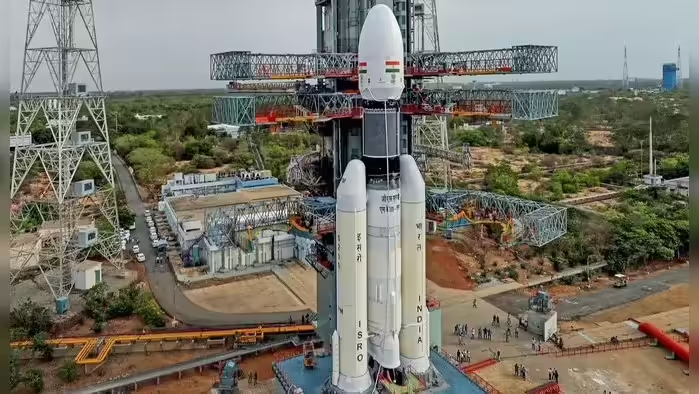
India’s PSLV-C62 mission, the country’s first space launch of the year, ended in failure, as the rocket veered off course due to a technical glitch. The mission was carrying 16 satellites and payloads, including a critical defense payload from DRDO, and was considered strategically important for India’s national diplomacy and global space ambitions. The failure has affected both objectives.
Lessons from Failure
Space mission failures are not uncommon. Agencies like ISRO, NASA, SpaceX, as well as China and Russia, have all faced setbacks at some point. Space remains an inherently high-risk domain, and failures provide crucial data and insights for future missions.
Experts emphasize that failures must be honestly investigated, mistakes learned from, and systems improved. Failure to do so can lead to significant losses, impacting both market share and reputation. Russia’s space program offers a notable example of how neglecting lessons from failure can affect long-term performance.
Reliability Concerns
The PSLV, long considered ISRO’s most reliable launch vehicle, has now experienced failures in consecutive missions, raising client concerns. The global space market is highly competitive, with new launchers promising faster and more efficient launches. ISRO can no longer rely solely on its past reputation.
Security Implications
Several satellites were lost in the launch, including a key defense payload from DRDO. India’s existing surveillance, intelligence, and secure communication infrastructure already has gaps, and the loss of a defense satellite exacerbates these vulnerabilities, particularly given the pressing need to strengthen capabilities due to regional security dynamics. Delays in these capabilities could have serious implications for national interests.
Impact on Ongoing Missions
ISRO’s prior achievements, such as the precise strike capabilities demonstrated in Operation Sindoor, relied heavily on its space assets. Every failure, however, can set back missions by months or even years, requiring replacement satellites, fresh funding approvals, reconstruction, and rescheduling of launch dates. After a challenging 2025, 2026 has started on a difficult note for ISRO.
Private Sector Participation
India is increasingly exploring private launch startups, but these are still in their early stages and cannot immediately fill the gap left by ISRO’s setbacks. The responsibility for executing critical national missions continues to rest with ISRO.
Experts suggest that while PSLV-C62’s failure is a setback, the lessons learned could strengthen ISRO’s systems, improve mission planning, and ultimately pave the way for future successes in India’s ambitious space program.
Discover more from SD NEWS agency
Subscribe to get the latest posts sent to your email.