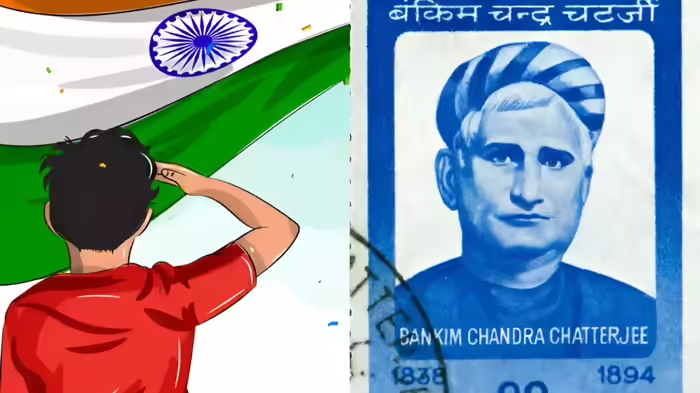
New Delhi: Almost every Indian has heard the patriotic song ‘Vande Mataram’, and its recitation can still send shivers down the spine. While many hear it during Republic Day (26 January) or Independence Day (15 August) celebrations, this iconic song is far more than just a melody—it embodies the spirit of India’s freedom struggle.
As Parliament marks the 150th anniversary of ‘Vande Mataram’, a special discussion is underway during the Winter Session, dedicating 10 parliamentary hours to this national treasure. While the song is widely recognized, here are five essential facts every Indian should know:
1. Who Composed This Immortal Song?
The song was composed by Bankim Chandra Chattopadhyay in 1870, blending Sanskrit and Bengali. It was originally written for his novel Anandamath and is celebrated for its literary excellence and profound patriotic sentiment.
2. First Public Performance
‘Vande Mataram’ was first sung in 1896 at the Calcutta session of the Indian National Congress by the legendary poet Rabindranath Tagore, inspiring freedom fighters across the nation.
3. First Publication
The song was first published in Bankim Chandra Chattopadhyay’s novel Anandamath in 1882, reaching a wider audience and becoming a symbol of India’s growing nationalist movement.
4. When It Became the National Song
‘Vande Mataram’ was officially designated as the National Song of India on 24 January 1950, while Jana Gana Mana was chosen as the National Anthem. The song continues to hold a special place in the hearts of Indians for its historical and patriotic significance.
5. Role in the Freedom Struggle
During the struggle for independence, ‘Vande Mataram’ emerged as a powerful national slogan, uniting Indians against British rule and fostering a spirit of nationalism. It was more than a song—it was a rallying cry for unity, courage, and freedom.
Controversy and Modern Perception
Over the years, some members of the Muslim community have avoided singing the full song due to religious sensitivities, often opting out of certain verses. Despite this, the song’s 150-year legacy was celebrated across India on 7 November 2025, with multiple events organized by both the central and state governments.
‘Vande Mataram’ is not just a song—it is the soul of India’s independence movement, a symbol of unity, and a source of pride for every citizen.
Discover more from SD NEWS agency
Subscribe to get the latest posts sent to your email.