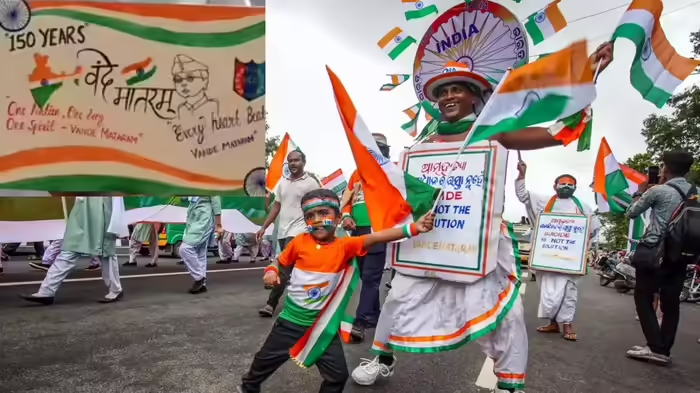
New Delhi: The Indian Parliament is set to hold discussions today on the 150th anniversary of the national song ‘Vande Mataram’. The government has allocated 10 hours of the Winter Session to debate the song, which has been at the center of controversy for decades. The question arises: can this long-standing debate finally be put to rest?
Historical Significance of ‘Vande Mataram’
‘Vande Mataram’ was composed in 1875 by Bengali writer Bankim Chandra Chattopadhyay and later featured in his acclaimed novel ‘Anandamath’. During India’s struggle against British rule, Hindu religious groups adopted it as a battle cry, inspiring intellectual and physical resistance. The song played a pivotal role in uniting Bengalis during the 1905 partition of Bengal. Revolutionary groups often sang it to boost morale, challenging British authority. Despite attempts by the colonial rulers to ban it, the song continued to inspire patriotic fervor.
Origins of the Controversy
In 1909, Syed Ali Imam, a leader of the Muslim League, and his supporters expressed objections, calling it a “song of infidels” and advising Muslims to avoid it. While the song symbolized Bengali unity and the larger independence movement, it became embroiled in communal tensions. To formalize national symbols, the Congress appointed a committee including Jawaharlal Nehru, Subhas Chandra Bose, and Rabindranath Tagore. Following Tagore’s recommendation, only the first two stanzas—praising the land, rivers, and gardens of India—were adopted as the national song, omitting verses referencing Hindu deities.
National Recognition Without Constitutional Mandate
On 24 January 1950, India’s first President Dr. Rajendra Prasad proposed giving ‘Vande Mataram’ the same status as the national anthem. However, it did not receive constitutional recognition. According to Article 51A of the Constitution, singing the national anthem ‘Jana Gana Mana’ is mandatory for all Indians, while ‘Vande Mataram’ is officially recognized as the national song without a legal obligation to sing it.
Despite its historical and patriotic significance, certain communities continue to object to singing the song, citing religious concerns over its references to Hindu deities. The ongoing parliamentary debate aims to address these issues and seek a resolution, potentially ending decades of artificial controversy surrounding India’s revered national song.
Discover more from SD NEWS agency
Subscribe to get the latest posts sent to your email.