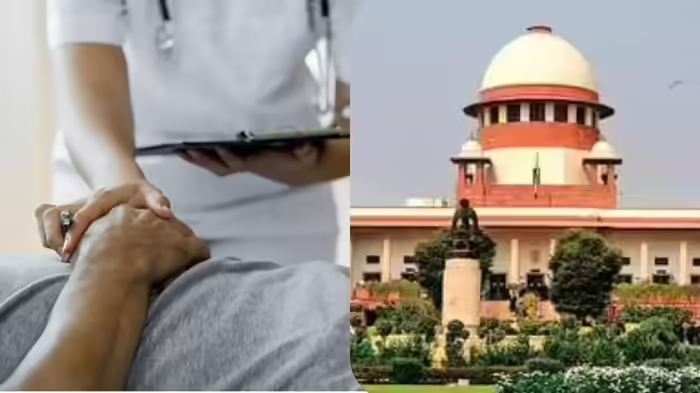
New Delhi: The Supreme Court of India has made a significant remark in the case of 31-year-old Harish Rana, who has been in a coma for the past 13 years. His parents have petitioned the court to allow passive euthanasia for their son. The court indicated that the time has come for it to make the final decision.
Harish Rana, who fell from the fourth floor on 20 August 2013, has undergone treatment in multiple hospitals, but his condition has not improved. AIIMS Delhi submitted a second medical board report as per the Supreme Court’s direction, which, like the first report, states that Harish has virtually no chance of recovery.
Supreme Court Bench Remarks
The bench, comprising Justices JB Pardiwala and KV Vishwanathan, described the AIIMS report as “very tragic.” Before proceeding further, the court expressed its desire to meet Harish’s parents in person. They have been asked to appear in court on 13 January for a private discussion. The AIIMS report will also be shared with Additional Solicitor General Aishwarya Bhati.
Lawyers to Meet Family
The Supreme Court directed two lawyers to meet Harish’s parents and siblings and report back. The court emphasized that it has reached a point where a final decision is necessary and will require the full assistance of the lawyers.
Supreme Court Orders
The court directed the registry to provide copies of the AIIMS report to Harish’s father’s lawyer, Rashmi Nandkumar, and ASG Aishwarya Bhati. The lawyers are requested to study the report and help the court by interacting with Harish’s family and submitting their findings.
Procedure for Passive Euthanasia
According to Supreme Court guidelines on passive euthanasia, the decision to withdraw artificial life support is taken only after the consent of both the primary and secondary medical boards. In case of disagreement between the reports, the court takes the final decision. An independent committee of experienced doctors in critical care may also be formed to advise the court.
Supreme Court’s Approach
The court exercises extreme caution in such matters, balancing the sanctity of life with the avoidance of unnecessary suffering. By choosing to directly engage with Harish’s parents, the Supreme Court has highlighted the gravity of the case and the careful consideration required before reaching a verdict.
Discover more from SD NEWS agency
Subscribe to get the latest posts sent to your email.