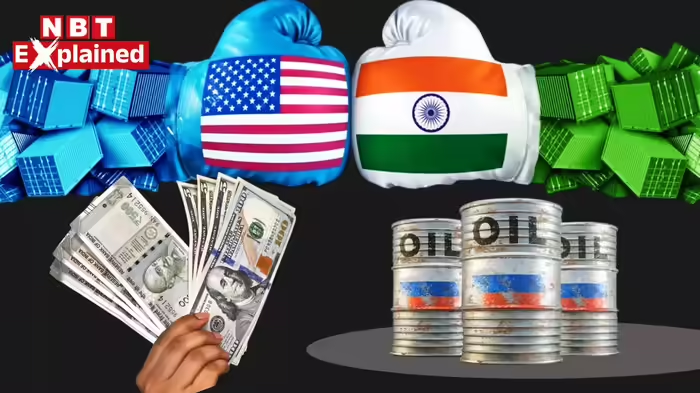
New Delhi: India finds itself navigating a complex energy dilemma, caught between continuing purchases of Russian crude oil and facing potential tariffs from the United States. As global geopolitics increasingly influence energy trade, India’s oil imports have become a focal point of strategic concern.
Following signals from Washington that countries importing Russian crude may face severe restrictions, India’s energy strategy has come under scrutiny. While the U.S. has offered Venezuela as an alternative crude supplier to India, Prime Minister Donald Trump has also threatened 500% tariffs on nations, including India, that continue buying Russian oil. Additionally, a 25% tariff on trade with Iran, where India is a major partner, has also been announced.
U.S. Pressures India Over Oil Imports
According to federal sources, crude oil is no longer just a commodity affecting fuel prices—it has become a strategic bargaining tool in global trade. The U.S. has repeatedly warned countries importing Russian crude about potential economic consequences, including punitive tariffs and restrictions. India and China are under particular scrutiny due to their high import volumes.
A bipartisan U.S. bill targeting Russian oil buyers could impose penalties of up to 500% tariffs, escalating concerns in Indian policy and economic circles. While India has not joined the sanctions against Moscow, it faces diplomatic pressure to reduce Russian oil imports amid global market volatility.
India Reduces Russian Oil Imports, Seeks Alternatives
Over the past months, India has begun cutting down its imports from Russia, even as domestic fuel demand hits record levels. Analysts warn that any disruption in crude supply could trigger inflation, push up fuel prices, and slow economic growth. Defense expert Lt. Col. (Retd.) JS Sodhi notes that as the world’s third-largest oil importer, India relies on imports for nearly 90% of its crude needs. Even small fluctuations in supply or prices can impact inflation, the rupee, and government finances.
From 2022 to now, India has imported over €140 billion worth of Russian crude, helping refineries lower costs and stabilize domestic fuel prices amid global uncertainty. At its peak, Russian crude accounted for roughly 45% of India’s imports.
U.S. Offers Venezuelan Oil as an Alternative
In a strategic shift, the Trump administration has made Venezuela’s crude available to India under a U.N.-controlled framework. The move follows a roughly $2 billion agreement between Caracas and Washington for the export of 30–50 million barrels of crude. This offer comes after India had previously stopped buying Venezuelan oil due to U.S. pressure. U.S. Energy Secretary Christopher Wright emphasized that nations can either cooperate with the U.S. in selling Venezuelan crude or forgo participation, framing oil flows as a tool to curb instability linked to Venezuela’s previous leadership.
Strategic Implications
The current scenario highlights how oil trade is no longer solely an economic decision but has become a geopolitical and strategic instrument. India must now balance energy security for its 1.4 billion citizens with potential diplomatic and economic consequences from one of its largest trade partners. The coming weeks will be critical as India navigates this high-stakes energy and trade dilemma.
Discover more from SD NEWS agency
Subscribe to get the latest posts sent to your email.