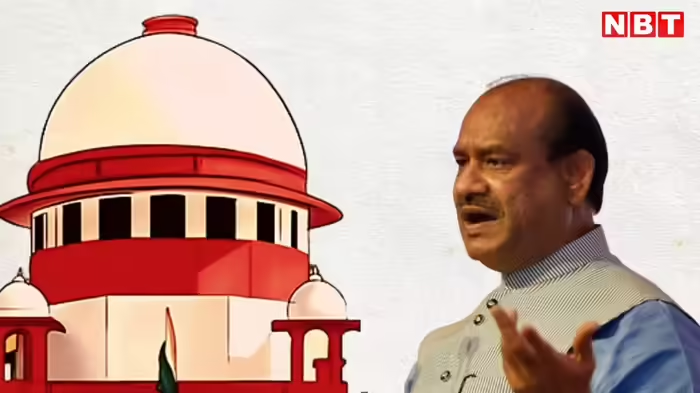
New Delhi: The Supreme Court on Wednesday clarified that there is no bar on the Lok Sabha Speaker Om Birla from constituting a committee to investigate allegations of corruption against Justice Yashwant Verma of the Allahabad High Court. The issue arose after the Rajya Sabha recently rejected a notice regarding the proposal to initiate such an inquiry.
A bench comprising Justice Dipankar Dutta and Justice Satish Chandra Sharma expressed disagreement with senior advocate Mukul Rohatgi, representing Justice Verma, who contended that following the resignation of Rajya Sabha Deputy Chairman Jagdeep Dhankhar, the Deputy Chairman had no authority to reject the notice for initiating a motion to remove the judge.
Supreme Court Flags ‘Procedural Gaps’
While delivering oral observations, the Supreme Court noted that there appear to be “certain procedural gaps” in the manner the Lok Sabha Speaker intends to constitute the inquiry committee. The court will examine whether these gaps are significant enough to halt the proceedings.
Rohatgi argued that if the notice for the removal proposal is presented in both Houses of Parliament on the same day, then the formation of the committee should be done jointly by both the Lok Sabha and Rajya Sabha presiding officers.
Justice Dutta clarified, “At first glance, we do not agree with Rohatgi’s points regarding the formation of the committee or the Deputy Chairman’s rejection of the notice. Our only concern is whether intervention under Article 32 is warranted to ensure whether Justice Verma was entitled to the benefits of a joint committee of both Houses.”
Validity of Parliamentary Committee Challenged
The bench is hearing Justice Verma’s petition challenging the validity of the parliamentary committee formed under the Justice (Inquiry) Act, 1968, to probe burnt note documents found at his residence. Rohatgi cited Section 3(2) of the Act, which states that if notices of a motion are presented to both Houses on the same day, no committee shall be formed until the notices are approved by both Houses, and only thereafter should a joint committee of the Lok Sabha Speaker and Rajya Sabha Chairman be constituted.
The bench observed that the Act does not explicitly bar the Lok Sabha from constituting a committee if one House rejects the notice. Justice Dutta asked, “If one House rejects the motion notice, where does it say the other House is prevented from proceeding?” He emphasized that the provision must be interpreted purposively.
Article 32 Intervention Questioned
The bench further noted that had both Houses accepted the notice, Justice Verma would have benefitted from a joint committee. The court questioned whether the procedural issue is sufficiently prejudicial to merit intervention under Article 32.
The next hearing has been scheduled for Thursday. Meanwhile, Solicitor General Tushar Mehta noted that the Rajya Sabha Chairman merely received the notice but did not issue any explicit order regarding acceptance. Justice Verma’s petition arises from the discovery of partially burnt notes at his official residence in New Delhi on March 14, which were later transferred from Delhi High Court to Allahabad High Court jurisdiction.
Discover more from SD NEWS agency
Subscribe to get the latest posts sent to your email.