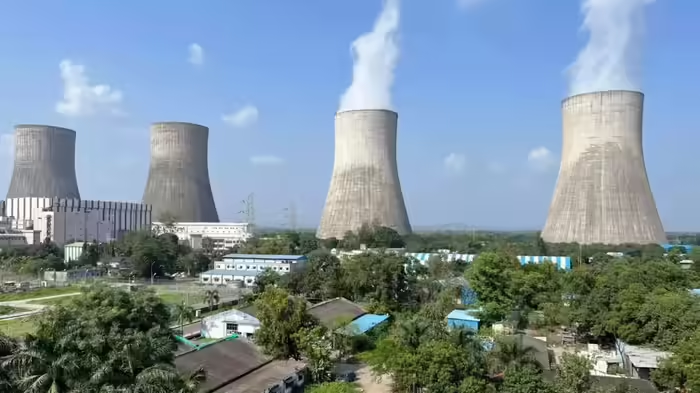
New Delhi: In a landmark move, the Narendra Modi-led government has approved the SHANTI Bill—Sustainable Harnessing and Advancement of Nuclear Energy for Transforming India—paving the way for private companies to enter the nuclear energy sector. This step is seen as crucial for India’s ambitious goal of achieving 100 GW of nuclear power capacity by 2047.
The SHANTI Bill aims to provide critical safety assurances to nuclear plant operators, while also clarifying the responsibilities of equipment suppliers. Under the new provisions, operator insurance coverage will be increased to ₹1,500 crore per incident, managed under the Indian Nuclear Insurance Pool.
Key Features of the SHANTI Bill:
- Private Sector Participation: For the first time, private companies can operate nuclear plants under clear regulations and government oversight.
- Foreign Investment: The bill allows up to 49% direct foreign investment (FDI) in nuclear energy projects.
- Legal and Regulatory Framework: A dedicated nuclear tribunal will oversee disputes, creating a uniform legal framework.
- Scope Limitations: Core activities such as nuclear material production, heavy water manufacturing, and waste management will remain under the Department of Atomic Energy’s (DAE) control.
Government Vision:
Finance Minister Nirmala Sitharaman had announced this plan during the Union Budget, unveiling a Nuclear Energy Mission with ₹20,000 crore allocated for research and development in small modular reactors (SMRs). The government aims to commission five indigenous SMRs by 2033. Prime Minister Narendra Modi also hinted at this policy shift last month, signaling India’s readiness to involve private players in its nuclear sector.
Why This Bill Matters:
Until now, only Nuclear Power Corporation of India Limited (NPCIL)—a government-owned company under DAE—could operate India’s 24 commercial nuclear reactors. The SHANTI Bill removes historical barriers, allowing private participation, which officials say is essential to increase India’s nuclear capacity tenfold in the next two decades.
Expert Insights:
Anujesh Dwivedi, Partner at Deloitte India, notes that nuclear tariffs are currently set by the DAE with recommendations from the Central Electricity Authority. “With private sector participation, there will be a need for an independent regulator to determine tariffs based on competitive principles,” he said.
The SHANTI Bill is expected to transform India’s nuclear energy landscape, encouraging investment, innovation, and faster expansion of clean energy resources.
Discover more from SD NEWS agency
Subscribe to get the latest posts sent to your email.