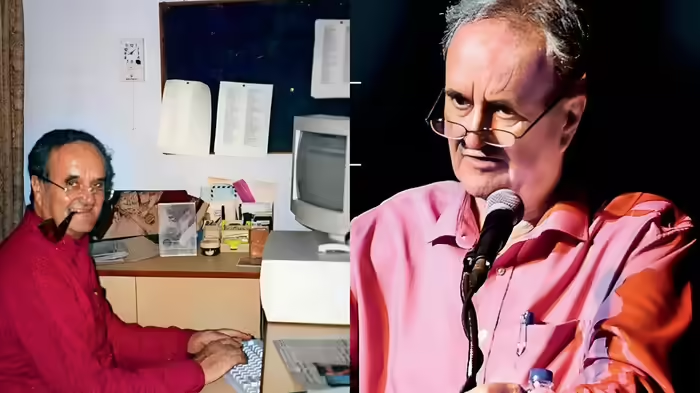
New Delhi: British journalist Mark Tully, who passed away recently at the age of 90, was born in India and spent most of his life covering the nation’s pivotal events for the BBC. From the India-Pakistan wars, the 1971 conflict, and Operation Blue Star, to the Babri Masjid demolition, Tully’s reporting captured history as it unfolded, often under extraordinary circumstances.
Born in India, Schooled in Britain
Tully was born on 24 October 1935 in Calcutta’s Tollygunge, where his father worked as a tea plantation officer. He spent his formative years in India but had limited interaction with local children, reflecting the lifestyle of British families at the time. Later, he was sent to Britain for studies and enrolled in Theology at Cambridge, initially aspiring to become a priest. After two years, he abandoned the pursuit, joining the BBC Personnel Department, and eventually moved back to India in 1964–65 to work for the Hindi-Urdu Service.
Facing Challenges During Emergency
During India’s Emergency (1975–77), Tully faced significant obstacles. Some officials viewed his reporting as critical of the government, and there were even discussions about his arrest. Ultimately, he was asked to leave India temporarily, returning after the Emergency ended to continue his reporting. He later covered Operation Blue Star closely, even entering the Golden Temple to report stories that intelligence agencies had not anticipated.
A Sensitive and Spiritual Journalist
Tully’s work reflected a rare combination of sensitivity and cultural awareness. He covered the 1978 Prayagraj Kumbh Mela, documenting it in his book No Full Stops in India, carefully ensuring that his writing would not hurt anyone’s sentiments. When under stress, he would recite the Hanuman Chalisa, drawing spiritual strength from it.
Simplicity and Dedication in Reporting
Known for his humility, Tully often adapted to challenging conditions. During a 1991 reporting assignment in a remote village in Ballia, he continued his work despite lack of facilities, even eating meals from street vendors while reporting.
Historical Coverage of Ayodhya
Tully’s career was marked by his fearless coverage of sensitive events, including the Babri Masjid demolition on 6 December 1992. Amid the chaos and hostility of the crowd, he navigated villages safely to report the news. On returning to Ayodhya, he was briefly detained by karsevaks, reflecting the risks he faced as a journalist committed to truth.
Mark Tully was not just a foreign correspondent; he was a part of India’s story, embracing its culture, people, and challenges with unmatched dedication and compassion.
Discover more from SD NEWS agency
Subscribe to get the latest posts sent to your email.