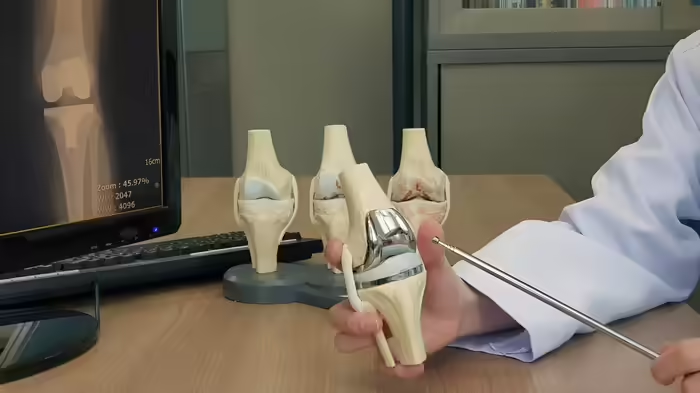
New Delhi, India: Thousands of patients in India may soon require revision joint replacement surgeries, as knee and hip implants from earlier decades begin reaching the end of their functional lifespan. Experts say these revision procedures are far more complex, costly, and risky than the initial surgeries.
This concern emerged at the three-day Revision Arthroplasty Conference (RAC) 2025 in Delhi, attended by over 850 orthopedic surgeons. The conference focused exclusively on revision joint replacement, a challenge experts describe as a silent but growing public health concern.
Implants Have a “Shelf Life”
Contrary to common belief, joint replacements are not lifelong. Most implants last 20–25 years, after which they may loosen, wear out, or fail. Dr. Anil Arora, Chairman and Head of Robotic Knee and Hip Replacement at Max Super Speciality Hospital, stated that India is now entering the first major wave of implant failures, creating urgent demand for trained revision surgeons.
Experts emphasized that traditional implants are not “failing” prematurely; rather, they are simply reaching the end of their natural life cycle. Prof. Vijay Kumar from AIIMS Delhi’s Orthopedics Department highlighted that the 2000s saw a surge in joint replacement surgeries in India, and many of these implants are now entering their final stages. Patients often experience loosening, wear, or discomfort, requiring medical attention.
Why Revision Surgery Is Needed
Revision arthroplasty involves removing the old implant, managing bone loss or infection, and reconstructing the joint using specialized components. This process demands extensive expertise, meticulous planning, and advanced technology.
Signs that an implant may require revision include:
- Persistent or increasing pain
- Difficulty walking or bearing weight
- Sensation that the joint feels loose or unstable
Many patients are unaware that regular check-ups are needed 10–12 years after initial surgery, and delays often result in more extensive damage, making revision surgery technically challenging.
This emerging challenge underscores the need for more trained revision surgeons in India, as the country braces for a wave of patients with aging implants, marking a critical phase in orthopedic healthcare management.
Discover more from SD NEWS agency
Subscribe to get the latest posts sent to your email.