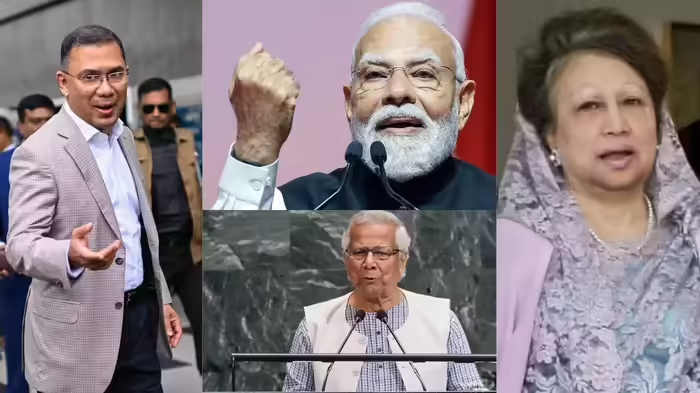
New Delhi/Dhaka: Bangladesh is witnessing a major political development as the interim government of Mohammad Yunus faces mounting pressure. Tarik Rahman, son of former Prime Minister Khaleda Zia, has returned to Bangladesh after 17 years, marking a significant turning point in the nation’s politics.
Rahman’s return comes at a time of political instability and widespread protests, triggered by the assassination of prominent young leader Sharif Usman Hadi. His homecoming has unsettled Mohammad Yunus and hardline factions in the country, particularly given Khaleda Zia’s strong ties with India and Prime Minister Narendra Modi.
PM Modi Expressed Concern Earlier
Prime Minister Modi had recently expressed concern over Khaleda Zia’s health and assured all possible assistance from India. Zia was hospitalized at Evercare Hospital, Dhaka, on 23 November due to a lung infection. The Bangladesh Nationalist Party (BNP) warmly welcomed Modi’s message, with senior BNP leader Ishtiaq Aziz Ulfat calling it “remarkable.”
Strategic Importance of Tarik Rahman
Indian eyes are now closely on Tarik Rahman, who could play a key role in forming a democratically elected government in Bangladesh. His presence is seen as critical for maintaining regional balance. India’s foreign policy emphasizes recognition only of democratically elected governments, making Rahman’s role significant for bilateral relations.
Massive Reception at Dhaka Airport
Having fled to London in 2008 amid corruption charges, Rahman was greeted by over 100,000 BNP workers at Dhaka Airport. With general elections scheduled for February next year and the Awami League potentially barred, BNP is emerging as the strongest contender. Given Khaleda Zia’s age (80) and health, Tarik Rahman is being seen as a potential future Prime Minister.
Changing Political Dynamics in Bangladesh
The political scenario in Bangladesh has shifted dramatically. During BNP’s previous tenure (2001–2006), its ally Jamaat-e-Islami now stands as a main rival. The interim government has dissolved the Awami League under strict anti-terrorism laws, creating a fragmented political landscape. Tarik Rahman’s return is therefore considered crucial as BNP attempts to consolidate power amid the changing political dynamics and growing influence of hardline groups.
Discover more from SD NEWS agency
Subscribe to get the latest posts sent to your email.