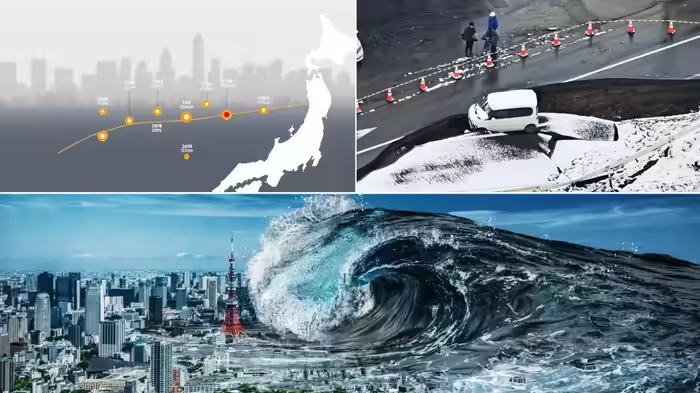
A powerful 7.5-magnitude earthquake has struck Japan, causing significant damage to roads, power stations, and residential buildings, leaving thousands of people affected. In response, Japan’s Meteorological Agency has issued a “mega-earthquake” warning near the northern coast, signaling an elevated risk of earthquakes of magnitude 8 or higher over the next seven days.
Tsunami Alert Issued
The earthquake occurred near a trench off the coast of Hokkaido and northeastern Japan, a known subduction zone where the Pacific Plate slides beneath the Honshu main island. Following the quake, the Meteorological Agency initially estimated a magnitude of 7.6 and warned of potential tsunami waves reaching up to 3 meters. In Iwate Prefecture, tsunami waves measured up to 70 centimeters.
Government Advisories
Japanese Prime Minister Sane Takaichi urged residents in affected areas to remain alert, stay updated via local authorities and the Meteorological Agency, and stock essential supplies in preparation for possible aftershocks.
Impact Beyond Japan
While the primary risk is to northern Japan, the warning also extends to parts of Russia’s Far East and potentially areas of Alaska, due to possible tsunamis and seismic shocks.
No Threat to India
Experts clarify that such Japan-trench events concentrate energy in the Pacific Ocean, while the Indian Ocean is mainly affected by subduction zones like the Sunda Trench near Java. Historical records, including the devastating 2004 Sumatra earthquake and tsunami, show that earthquakes in the Pacific have negligible direct impact on India’s coastline.
Why Japan Is Prone to Earthquakes
Japan sits atop a subduction zone where the Pacific Plate slides beneath the North American and Okhotsk Plates, accumulating immense pressure. This can trigger large megathrust earthquakes, as seen in 2011 when a 9.0-magnitude quake near the Japan Trench caused a catastrophic tsunami, killing nearly 20,000 people and damaging the Fukushima Daiichi nuclear plant.
India’s scientific community confirms that this warning underscores the importance of early warning systems and tectonic monitoring but poses no immediate threat to Indian shores.
Discover more from SD NEWS agency
Subscribe to get the latest posts sent to your email.