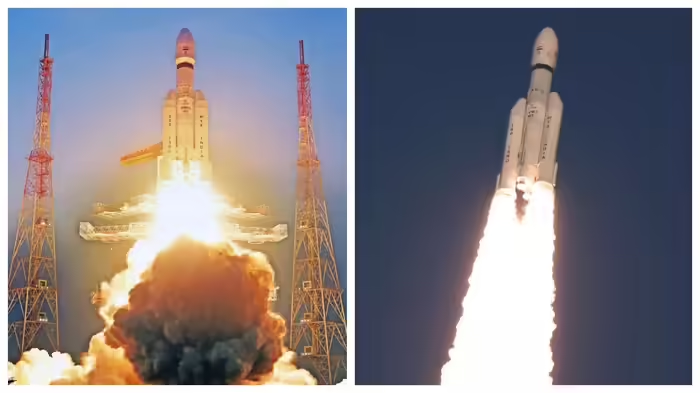
In a setback for India’s space ambitions, ISRO’s PSLV-C62 mission failed on Monday due to a technical glitch, resulting in the loss of 15 satellites. However, a small Spanish private company’s space capsule, ‘KID’, onboard the mission, survived and successfully transmitted flight data back to Earth, offering a rare silver lining.
Mission Details and Failure
The PSLV-C62 rocket lifted off from Sriharikota at 10:18 AM on Monday, carrying a total of 16 satellites, including India’s Anvesha satellite and the Spanish capsule KID. A malfunction in the rocket’s third stage, specifically involving the strap-on motors providing thrust, caused the mission to deviate from its intended trajectory, leading to the loss of all satellites except KID.
ISRO Chairman V. Narayanan confirmed that the technical anomaly occurred during the third stage of flight, and a detailed investigation has been initiated to determine the precise cause of the failure.
KID Capsule Survives and Sends Data
Despite the rocket failure, KID transmitted flight data for approximately 190 seconds, a remarkable achievement under such circumstances, as payloads usually fail to communicate after mission anomalies. Designed to test re-entry into Earth’s atmosphere, the capsule’s survival provides valuable data for future missions.
Strategic and Diplomatic Importance
The PSLV-C62 mission was considered crucial for both India’s national diplomatic needs and its global ambitions in space. While the mission’s failure represents a setback, the performance of the KID capsule demonstrates resilience and offers insights for improving payload safety and re-entry systems in future collaborative projects.
ISRO officials are now focused on analyzing the anomaly thoroughly to ensure lessons are learned and future PSLV missions continue to support India’s growing presence in space exploration.
Discover more from SD NEWS agency
Subscribe to get the latest posts sent to your email.