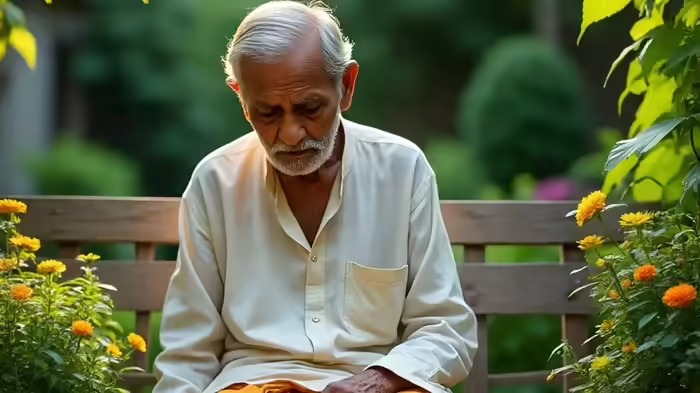
New Delhi: Recent incidents across India have highlighted the need for technology that can monitor people living alone around the clock and alert others in case of emergencies.
A case in point is 69-year-old Deepak Kumar from Ghaziabad, who lived alone and passed away—likely due to a heart attack—without anyone noticing for 12 days. Neighbors last saw him on New Year’s Eve, and though his phone rang repeatedly until 4 January, no one checked. His body was found only on 11 January.
Deepak Kumar’s story is not unique. Many people relocate for work, gradually drift away from family, or face health challenges that isolate them. In such circumstances, even a short lapse in daily routine can leave someone entirely alone and vulnerable.
China’s Solution: ‘Are You Dead?’
In China, an app called Are You Dead? has gained immense popularity, topping the paid apps chart on the Apple App Store. Designed for individuals living alone, it prompts users to check in daily by pressing a button. Failure to check in for two consecutive days triggers an alert to a pre-designated emergency contact. The app, launched last summer, has struck a chord in a country where one in five households is a single-person home.
A one-time fee of around ₹100 is required, with no subscription needed. While the concept may sound morbid, it serves a vital purpose: ensuring that someone genuinely cares and will act if a solitary resident goes missing or falls ill.
Why Such an App Is Needed in India
Currently, about 5% of Indian households consist of a single resident, up from just over 3% in 1992, according to UN statistics. Cases like Deepak Kumar’s underline how little is known about solitary living in India and its associated risks.
Past incidents highlight the gravity:
- In 2013, a 53-year-old woman in Bengaluru was found dead in her home after five months, having succumbed to hunger.
- In 2018, another 52-year-old woman in the city died alone, her body discovered three weeks later.
- In 2023, a man discovered his 73-year-old mother deceased in Greater Noida after weeks alone.
Loneliness in India: A Growing Concern
Surveys such as the World Values Survey show that while Indians increasingly value independence, family ties remain strong. Even within households, loneliness can emerge—parents who focus exclusively on family but remain isolated from the outside world, or children living away from home yet disconnected emotionally from their families.
Small disruptions in care or routine can amplify the effects of loneliness. In the 1990s, more than one in five Indians reported feeling lonely or socially isolated, and although recent surveys have not asked this question, the phenomenon persists.
Existing Measures for Seniors in India
Some informal safety systems exist. In many households, a simple “Good Morning” WhatsApp message lets family and neighbors know that seniors are safe. Several city police forces have also implemented monitoring initiatives:
- In Kolkata and Delhi, seniors can register for routine check-ins. Officers visit periodically, provide groceries or medicines, or simply ensure residents are safe.
- In Uttar Pradesh, police operate a dedicated emergency number, 112, with a check-in scheme where officers routinely verify the well-being of seniors.
- Cities like Mumbai and Nagpur are also rolling out similar programs to safeguard elderly and solitary residents.
As Indian society evolves, the need for dedicated technology—like China’s Are You Dead?—to monitor the vulnerable and ensure timely assistance is becoming increasingly urgent.