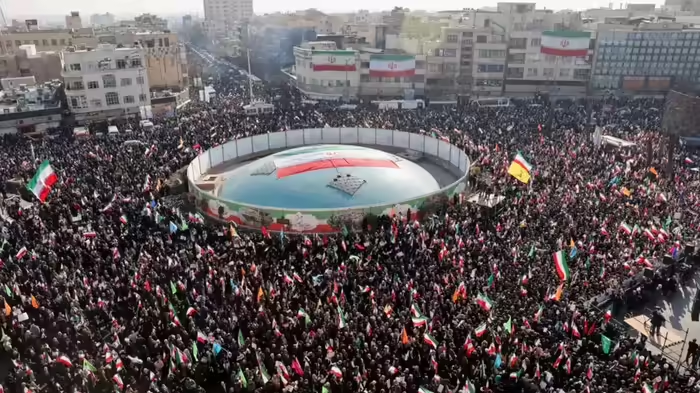
New Delhi: Iran is witnessing one of the largest uprisings since the 1979 Islamic Revolution. What began in December as protests against inflation and economic hardship has now escalated into calls for the overthrow of the Islamic Republic. Millions of Iranians have taken to the streets, and despite brutal crackdowns, the unrest shows no sign of abating.
Widespread Unrest
The protests, which started on 28 December in Tehran’s Grand Bazaar and other commercial hubs, have now spread across all 31 provinces. Initially led by merchants opposing the plummeting rial (14.5 lakh rials per USD) and soaring inflation (42%), the movement has grown to include students, women, pensioners, and youth. The Iranian government has restricted internet and phone services, but satellite networks like Starlink have helped sustain the protesters’ communication. Human rights organizations report over 2,000 deaths as of 10 January.
Shifting Geopolitical Dynamics
The crisis threatens to disrupt global oil supplies. Any closure of the Strait of Hormuz would impact Saudi Arabia, Iraq, and the UAE, potentially pushing Brent crude above $60 per barrel. Meanwhile, Iran’s proxies—Hezbollah and Hamas—have been weakened, heightening regional instability. While the Trump administration is expected to enforce stricter sanctions, Russia and China may offer limited support; however, Russia’s capacity is constrained due to the ongoing Ukraine conflict. A change in Iran’s leadership could reshape Middle Eastern geopolitics and affect global energy markets and security.
Chabahar Project at Stake
Iran has long been a strategic partner for India, serving as a balancing point in West Asia. The Chabahar Port project exemplifies this partnership. Under a 10-year agreement signed in 2024, Indian Ports Global Limited (IPGL) had committed $12 million for equipment and $25 million in credit lines to develop the port. The project provides India a crucial route to Afghanistan and Central Asia, bypassing Pakistan. But strikes, internet blackouts, and supply chain disruptions have already stalled operations.
The Chabahar-Zahedan railway line, integral to the International North-South Transport Corridor (INSTC), was scheduled for completion by mid-2026. Delays in this 700 km line threaten India’s connectivity, particularly in mineral and energy imports from Afghanistan.
Economic Risks
Iran is India’s second-largest Basmati rice market, with $75.3 million in exports during 2024-25. Trade in tea, spices ($7 million), and dried fruits ($5.5 million) was also significant. Threats of 25% tariffs by the US on trade with Iran have already caused concern among exporters. Combined with disruptions in markets like Pakistan and Russia and the rise in global oil prices, India’s inflationary pressures are likely to increase.
Security Concerns
Around 500,000 Indian students and businesspeople in Tehran and Isfahan face risks. The Ministry of External Affairs has urged Indians to leave Iran promptly. Iran’s instability also affects BRICS and SCO engagements, the Gwadar port project in Pakistan, and the Taliban regime in Afghanistan, complicating India’s regional strategy.
India’s Path Forward: Caution and Diplomacy
India has historically maintained a delicate balance, fostering deep ties with Israel and Arab nations while sustaining relations with Iran. In the current scenario, India must adopt proactive diplomacy, increase engagement via SCO and BRICS platforms, and explore alternate funding and trade routes to safeguard the Chabahar project. If a new regime emerges in Iran, it could potentially align more closely with India’s strategic interests. For now, vigilance remains India’s strongest tool.
Discover more from SD NEWS agency
Subscribe to get the latest posts sent to your email.