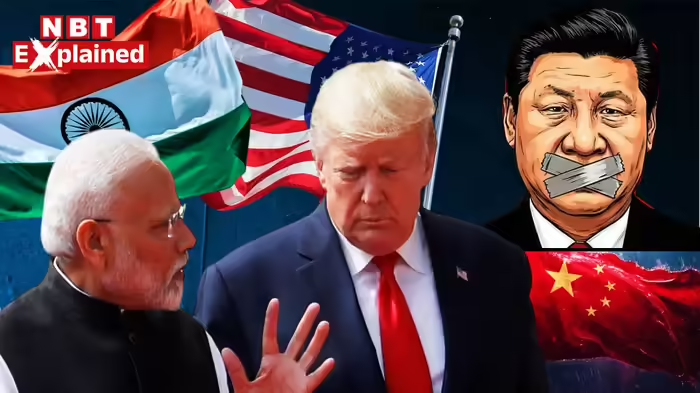
The recently concluded India-US trade deal has delivered a major blow to China, tipping the balance decisively in India’s favor. With the agreement now in effect, several sectors in China face heightened challenges, while India stands to gain a significant competitive edge.
Trade Deal Shifts Advantage to India
While U.S. President Donald Trump had kept India entangled in tariff and ceasefire negotiations for nearly ten months, the final trade agreement caught China by surprise. The deal provides India with a clear path to outperform China in trade with the United States. The benefits extend beyond the reduction of tariffs from 50% to 18%—China now faces doubled challenges in sectors where it had previously enjoyed advantages.
Earlier, despite high tariffs, China maintained a relatively strong position in U.S. trade compared to India. Post-deal, the situation has flipped decisively in India’s favor.
How China Is Impacted
Even after the U.S. lowered fentanyl-related tariffs to 10%, American tariffs on 99% of Chinese exports remain at 37.5% or 55%, with more than 70% of products facing the higher 55% rate. Electric vehicles (EVs) are subjected to tariffs as high as 130%. Previously, India faced a similar situation when the U.S. imposed 25% tariffs and additional penalties on Russian oil imports. With the new trade deal, India’s tariffs drop to 18%, completely reversing its trade position.
India Gains 50% Advantage
According to The Economic Times, the deal grants India additional concessions beyond the tariff reduction, including the ability to export competitively priced electric vehicles to the U.S. This gives India a substantial edge over China—estimated at roughly 50% in terms of trade advantage.
MSME Sector to Undercut China
A major beneficiary of the trade deal is India’s MSME sector, which accounts for about 60% of India’s $20 billion exports to the U.S. The deal significantly eases tariffs for these small and medium enterprises, with some categories even receiving zero tariffs. This sector, previously dominated by China globally, now represents a strategic opportunity for India to capture market share.
Strategic Gains in Rare Earths
India’s gains are not limited to trade tariffs. Prior to the deal, India had already joined the U.S. critical minerals initiative, which aims to secure alternative supply chains for rare earth minerals—a move that has put China under diplomatic pressure. India currently controls only 3% of the rare earth permanent magnet market, making this initiative a key strategic priority. A foreign ministers’ meeting of 50 countries in Washington this week will further strengthen India’s position.
The Indo-US trade deal is thus poised to not only boost India’s economic standing but also weaken China’s near-monopoly in multiple sectors, marking a major geopolitical and commercial shift in the region.
Discover more from SD NEWS agency
Subscribe to get the latest posts sent to your email.