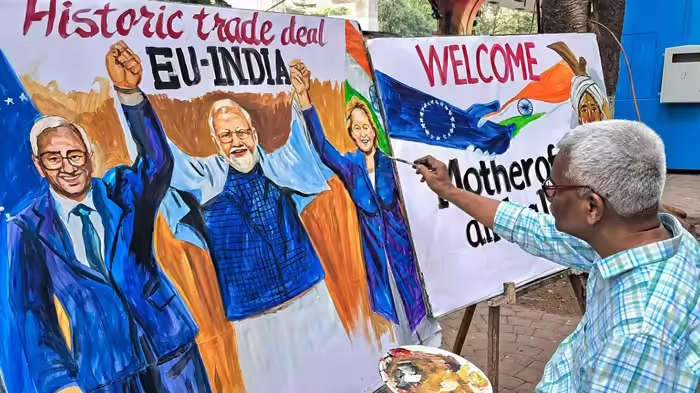
New Delhi: India’s recently concluded trade agreement with the European Union (EU) is being hailed as a landmark deal with far-reaching benefits. Negotiated over years, this Free Trade Agreement (FTA) not only strengthens historical trade ties but also reflects a commitment to rules-based trade amid a volatile global economic environment.
Historical context
India’s trade relationship with Europe dates back to 250 BCE, when Indian muslin, cotton, handicrafts, spices, emeralds, and other precious stones were highly sought after in European markets. In return, India received gold and silver, marking a period of unprecedented trade growth. Efforts to formalize this relationship through a free trade agreement began in 2007, though talks stalled in 2013 due to disagreements. Negotiations resumed in 2022, and strong political commitment and visionary leadership eventually enabled the deal to be finalized.
A game-changing agreement
The India-EU FTA is considered one of the most significant trade agreements in recent times. It has the potential to create one of the world’s largest free trade zones, encompassing 28 countries and nearly 2 billion people, representing 25% of global GDP. The deal addresses both goods and services, offering market access, regulatory solutions, intellectual property (IP) protection, and enhanced technology transfer and information flow.
Opening doors to new markets
The FTA aims to provide market access for over 99% of Indian exports, with at least 90% of exports receiving immediate duty-free entry. Labor-intensive sectors such as textiles, leather, gems & jewelry, handicrafts, and marine products stand to benefit significantly. Meanwhile, industries like chemicals, electronics, agro-processing, and minerals gain opportunities to diversify exports to the EU’s vibrant markets. India has also granted phased market access to EU automobiles through tariff quotas, while liberalizing wine imports in a manner that safeguards domestic industry interests and encourages high-end competition.
Opportunities in services
The agreement opens significant opportunities for services trade. India has secured EU commitments across 144 service sectors, including provisions for electronic payments systems leveraging India’s UPI digital payment expertise. Additionally, practitioners of AYUSH and traditional medicine gain greater certainty to offer services in European countries.
Promoting fair and sustainable trade
The FTA aims to foster a free, fair, and mutually beneficial trade relationship, presenting a collaborative model for sustainable development. Mechanisms such as rapid response systems, non-violation complaints, and independent annexes address specific policy or product-related concerns. The deal carefully balances market-opening ambitions with the concerns of sensitive sectors like dairy and agriculture, including the interests of small and marginal farmers. The EU showed flexibility to accommodate these issues.
Complementing India’s broader trade strategy
In an era of global supply chain disruptions, the India-EU FTA complements India’s other trade initiatives, including agreements with the UK, EFTA, and multiple broad trade partnerships. Since 2021, India has signed nine comprehensive trade deals and continues negotiations on several others. The conclusion of the India-EU FTA is expected to act as a catalyst for India’s new economic and trade initiatives, accelerating growth and market integration.
Discover more from SD NEWS agency
Subscribe to get the latest posts sent to your email.