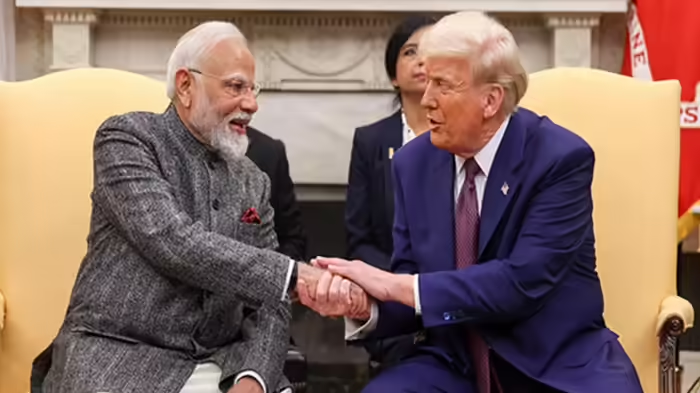
New Delhi: The recent trade deal between India and the United States was not merely a commercial concession. Reducing U.S. tariffs on Indian goods to 18% reflects India’s growing diplomatic leverage, multilateral engagement, and central role in global power dynamics. While the move provides immediate relief to Indian exporters, it also carries conditions regarding energy imports and tariff adjustments.
Strategic Significance
The decision comes at a moment when India has finalized its landmark trade agreement with the European Union, assumed the BRICS chairmanship, and strengthened strategic cooperation with the U.S. in forums like QUAD. These developments left the Trump administration with no choice but to recognize India not just as a rising market, but as an indispensable strategic partner.
The EU Deal
India’s agreement with the European Union has reshaped global trade equations. The deal grants India expanded access to European markets in textiles, green technology, pharmaceuticals, and digital services. Conversely, Europe gains access to India’s vast consumer market and infrastructure investment opportunities.
Pressure on the U.S.
The EU deal signaled that India has alternatives if the U.S. adopts a hardline trade stance. India’s strategic autonomy shifted from principle to practical power, compelling the Trump administration to lower tariffs partly under competitive pressure.
Diplomatic Strength
India’s BRICS chairmanship has further enhanced its diplomatic position. Amid the Ukraine conflict, global energy crises, and criticisms of the dollar-based financial system, BRICS has emerged as an alternative platform. India, as chair, has prioritized the concerns of the Global South, including energy security, debt relief, and diversified supply chains. The U.S. recognized that isolating India or exerting excessive pressure could push it toward greater BRICS activism and a more independent global role. The tariff cut can thus also be seen as a strategy to keep India “within the system.”
Impact on QUAD
The QUAD — comprising India, the U.S., Japan, and Australia — is no longer solely a security forum. It underpins economic stability, technological cooperation, and supply chain resilience in the Indo-Pacific, with India as its geographic and moral center. The Trump administration understood that any trade-related dissatisfaction from India could weaken U.S. strategic objectives in the region.
Relations with Russia
The U.S. has pressured India over its reliance on Russian oil, a key and contentious factor. By importing affordable Russian crude, India saved billions of dollars and curbed domestic inflation. Reducing this dependence while balancing other energy sources is challenging but remains a strategic choice, not a surrender. India plans to diversify energy imports, enhance gas infrastructure, and accelerate green energy investments.
Challenges in Agriculture and Trade
The tariff reduction provides immediate benefits to Indian exporters, boosting competitiveness in jewelry, textiles, and pharmaceuticals, potentially generating millions of jobs over the coming years. However, zero tariffs on U.S. agricultural and energy products could increase competition for domestic farmers and MSMEs, requiring careful government measures in subsidies, export incentives, and skill development.
Negotiating Strength
Critics may frame the tariff cut as bowing to U.S. pressure. From a broader perspective, it demonstrates India’s negotiating acumen. India maintained its ties with Russia, upheld its independent role in Europe and BRICS, and used multilateral platforms to signal that collaboration is the practical path forward.
Balanced Diplomacy
The tariff cut is a diplomatic victory for India — achieved not through confrontation, but through strategic balance. If this balance continues, India’s rise as a global leader may accelerate. Long-term benefits of the deal will require sustained policy vigilance, reaffirming that true power lies in strategic autonomy.
Discover more from SD NEWS agency
Subscribe to get the latest posts sent to your email.