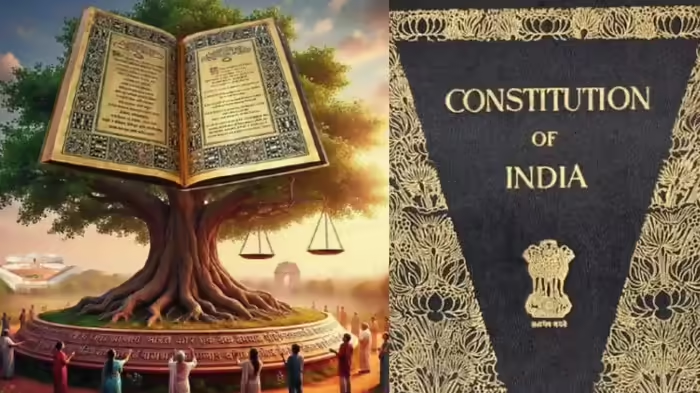
New Delhi: It is a matter of pride for India that despite numerous challenges, its democracy and Constitution have remained resilient. Yet, emerging threats from religious and caste-based politics are cause for concern.
India became a republic just two and a half years after gaining independence, whereas Pakistan took nearly nine years to achieve the same, experiencing repeated setbacks to its democracy. Studies suggest the average lifespan of constitutions worldwide is merely nine years, making India’s constitutional stability a remarkable achievement.
Tested and Proven
Granville Austin, an authority on constitutional studies, described the Indian Constitution as one of the greatest political undertakings since the U.S. Constitution of 1787. Its strength lies in its ability to withstand the very challenges it was designed to address. The smooth transfer of power following Jawaharlal Nehru’s death further confirms its success.
Even critics like the political scientist Ivor Jennings, who once doubted India’s constitutional durability, were proven wrong as the Constitution continues to thrive decades later, unlike in several other nations.
Emerging Threats: Caste and Communal Politics
Today, communalism and caste-based ideologies are gaining intellectual support, with initiatives such as caste-based enumeration stirring controversy. Leaders like Rahul Gandhi have campaigned for it, but historically, the Congress party recognized in 1955 that separatist tendencies based on caste threaten democracy.
Prime Minister Nehru had warned provincial leaders in 1953 that provincial, communal, linguistic, or ethnic sentiments could undermine national unity. President Rajendra Prasad emphasized that such sentiments must always remain subordinate to the national interest.
Constitutional Challenges in Practice
Current debates over the Special Intensive Revision (SIR) by the Election Commission have raised concerns over fairness, with allegations that opposition supporters could be excluded from voter lists. While the Supreme Court has allowed the process to continue, it has mandated additional identity documents to ensure impartiality.
Corruption and Governance
Corruption has been a persistent challenge since independence. Gandhi reportedly received 80 daily letters on corruption in 1946, and Nehru warned parliamentarians in 1948 that “little corruption,” like a “little pregnancy,” could grow if unchecked—a prediction that has held true.
Experiences with coalition governments show that while development may slow, constitutional institutions are strengthened. Conversely, single-party dominance risks undermining institutional checks and weakening the cabinet system.
India’s Constitution has weathered immense pressures, yet safeguarding it from caste, communal, and institutional threats remains an ongoing responsibility for its citizens and leaders.
Discover more from SD NEWS agency
Subscribe to get the latest posts sent to your email.