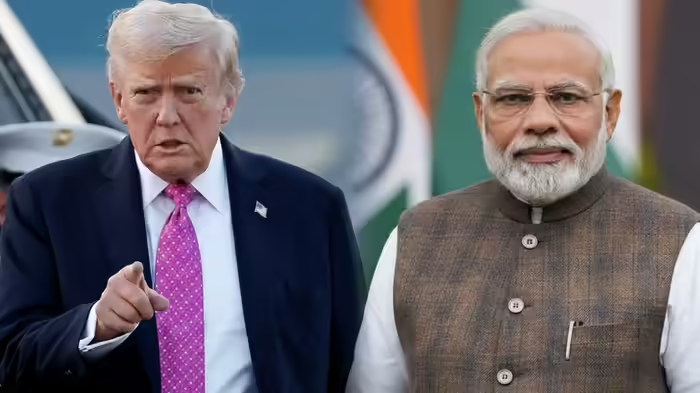
It has been barely a week since India and the United States signed their latest trade agreement, yet several significant changes have emerged in the deal—most recently concerning pulses. The fact sheet accompanying the trade deal has also been updated, reflecting India’s intent to purchase over $500 billion worth of energy, information and communication technology, coal, and other products from the US. Here’s a look at the five major developments over the past ten days.
1. Tariff Relief for India
The most notable change involves tariffs. The US has removed additional “penalty tariffs” on Indian goods. Effective from 7 February, the new rules cut the effective tariff on Indian exports to 18%, giving Indian exporters a competitive edge over rivals such as Vietnam and Mexico.
2. Reducing Russian Oil Imports and a New Energy Agreement
Energy has been a key condition of the India-US trade deal. According to the Trump administration, India has agreed to drastically reduce or stop direct and indirect imports of Russian oil. Previously, India imported up to 1.7 million barrels per day from Russia; under the new arrangement, imports are expected to drop to 500,000–600,000 barrels per day. India will now source oil from the US and Venezuela. Major companies like Reliance and Indian Oil have already halted new Russian oil orders for April 2026 delivery. Meanwhile, the US has fully opened its markets to Indian gems, jewelry, and generic pharmaceuticals, providing a major boost to India’s pharma and jewelry sectors.
3. $500 Billion Purchase Commitment
Under the agreement between Prime Minister Narendra Modi and President Donald Trump, India intends to purchase $500 billion (approximately ₹41 lakh crore) worth of goods from the US. The deal includes high-tech equipment, data centers, hundreds of Boeing aircraft and spare parts for Air India and IndiGo, and large volumes of coking coal and LNG. Additionally, India has signaled a gradual easing of the digital services tax (equalization levy), creating a more investor-friendly environment for American companies.
4. Protection of Agriculture and Sensitive Sectors
India has taken measures to protect domestic farmers. A “negative list” has been established, exempting certain items from tax relief, including dairy, meat, wheat, rice, maize, and millet. Genetically modified maize and soy products will not be allowed, ensuring that American dairy and meat producers do not gain unchecked access to India’s domestic market.
5. Strategic and Security Implications
The India-US trade deal extends beyond commerce. Under the 2025 Peace Act, the US will grant India priority access in civil nuclear energy and defense manufacturing, similar to its closest NATO allies. This will accelerate US investment into India and strengthen strategic ties, particularly in countering China’s influence in the region.
The trade agreement, therefore, is not just a commercial arrangement but a strategic partnership with significant economic, agricultural, and security dimensions—reflecting the evolving dynamics of India-US relations.