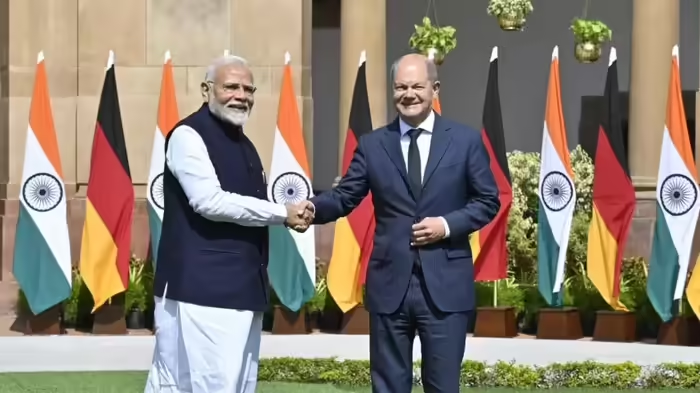
New Delhi: India’s ties with Germany are entering a new phase, following the recent visit of German Chancellor Friedrich Merz to India. This visit coincided with 25 years of strategic partnership and 75 years of diplomatic relations between the two nations, underscoring a shift from purely trade and investment-focused interactions toward a comprehensive strategic partnership.
During the visit, 19 significant agreements were signed, aiming to bridge the gap between Europe’s advanced technologies and India’s production capabilities.
Defense and Industrial Cooperation
A highlight of Chancellor Merz’s visit was the joint declaration on defense industrial cooperation, signaling a move beyond the traditional buyer-seller relationship. India and Germany are expected to collaborate on weapon development and manufacturing, facilitating exports and ensuring the transfer of key German defense technologies to India. Representatives from leading submarine companies accompanied Merz, hinting at the progression of a multi-billion-dollar project for six advanced submarines.
Economic and Technology Agreements
In light of increasing global protectionism, both leaders emphasized the need to diversify supply chains. A new CEO Forum was created to involve business leaders directly in decisions related to government investments. Agreements were reached in sectors including semiconductors, critical minerals, and telecommunications, with Chancellor Merz expressing hope that an India-EU Free Trade Agreement (FTA) could be finalized by the end of the month.
Green and Sustainable Development
Germany pledged an additional €1.24 billion for the Green and Sustainable Development Partnership, targeting green hydrogen, electric vehicles, and climate-resilient urban infrastructure. Notably, a green ammonia agreement between India’s AM Green and Germany’s Uniper was signed.
Visa and Education Initiatives
Two significant announcements during the visit included:
- Visa-free transit: Indian passport holders can now transit through German airports without a visa.
- Education expansion: German universities will open campuses in India, while Indian healthcare and IT professionals will gain opportunities in Germany.
Upcoming European Engagements
Next month, French President Emmanuel Macron will attend the India-AI Impact Summit in New Delhi, marking the first global AI conference in the Global South, with France supporting India’s stance on sharing technology benefits with developing countries.
Additionally, European Council President António Luís Santos da Costa and European Commission President Ursula von der Leyen will visit India from 25–27 January to attend the 77th Republic Day celebrations and co-chair the 16th India-EU Summit.
Strategic and Global Context
India-EU relations are influenced by shifting global geopolitics, including policies under Trump, rising world instability, and the need for a rules-based international order, particularly in the Indo-Pacific region with a focus on China. Both sides are keen on trade diversification, investment protection, and supply chain resilience, viewing India as a rapidly growing market. Collaboration is expanding in digital infrastructure, semiconductors, green hydrogen, and climate action, though EU carbon border policies have led to minor points of friction.
A Multilateral World Vision
Both India and the EU aim to foster a multipolar world order, preserving strategic autonomy amid major powers. The recent agreements and initiatives indicate that India-Germany and broader India-EU relations are poised to strengthen further in the coming years.
Discover more from SD NEWS agency
Subscribe to get the latest posts sent to your email.