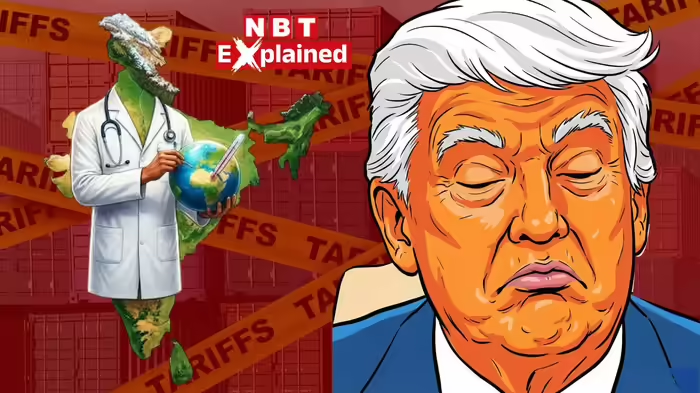
New Delhi: Amid escalating U.S. tariff threats, India is set to accelerate its self-reliance and indigenous manufacturing efforts. Chief Economic Advisor (CEA) V. Anant Nageswaran has identified ten critical areas requiring domestic development, highlighting five strategic clusters that will serve as pillars for India’s self-sufficient economy. The remarks come as U.S. President Donald Trump continues to wield tariffs as leverage, with India-U.S. trade talks yet to yield a resolution.
Strategic Gaps in Semiconductors and Defence Manufacturing
According to a report in The Economic Times, the five clusters include semiconductors and defence manufacturing, where India currently faces significant strategic gaps. These areas demand urgent focus to strengthen domestic capabilities. Nageswaran outlined these priorities during a presentation at the National Conference of Chief Secretaries (December 26–28, 2025).
‘Swadeshi’ as a Policy Instrument
Nageswaran emphasized that India must treat ‘Swadeshi’ as a policy tool to counter global trade volatility. Highlighting the U.S. tariffs, China’s export licensing, and the European Union’s Carbon Border Adjustment Mechanism, he noted: “Trade is no longer neutral, markets are no longer neutral, and supply chains have become strategic weapons for nations.”
Three Pillars of Self-Reliance
In a session on Self-Reliant India and Intelligent Import Substitution, the CEA outlined three principles for achieving autonomy:
- Building a domestic ecosystem through major regulatory reforms.
- Formulating policies with a global perspective while attracting international investments.
- Enhancing export competitiveness, while reducing legacy regulatory burdens and colonial-era bureaucratic hurdles through an entrepreneurial mindset.
Developing India’s Indigenous Ecosystem
Nageswaran stressed the importance of financing imports through domestic exports and localizing supply chains. Citing the smartphone industry as an example, he urged central and state governments to establish local ecosystems for critical imports, particularly given that nearly half of global imports from China rely on just 50 brands and their supply chains.
Priority Clusters for Indigenous Development
CEA’s presentation categorized sectors into tiers:
- Tier 1 (Non-negotiable & Highly Feasible): Edible oils, pulses, fertilizer inputs (NPK alternatives), APIs and key intermediates, industrial chemicals, power electronics (IGBTs, MOSFETs), and telecom/networking equipment (non-frontier chips).
- Tier 2 (Strategically Important): Heavy machinery, industrial pumps and compressors, EV motors and drivetrains, non-critical medical devices, and strategic core materials like permanent magnets, battery cells, cathode materials, solar wafers, and cells.
- Emerging Tier: Tunneling machines, defence electronics, sensors, optics, railway signaling and control systems, electrolyzers, and hydrogen equipment.
Demographic and Economic Inflection Point
Highlighting India’s demographic advantage, Nageswaran noted that millions of young workers will enter the workforce in the next two decades. He emphasized that higher education quality, relevance, and adaptability will determine whether this demographic dividend drives growth or social tension, urging states to lead this transformative agenda.
As India navigates geopolitical trade pressures and strategic dependencies, these steps signal a determined push toward self-reliance, resilient supply chains, and globally competitive indigenous industries.
Discover more from SD NEWS agency
Subscribe to get the latest posts sent to your email.