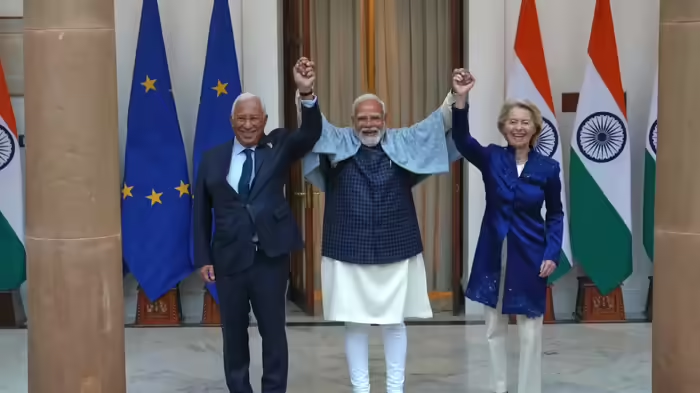
New Delhi/Brussels: The historic Free Trade Agreement (FTA) between India and the European Union, finalised on 27 January, marks a significant milestone in global trade and geopolitics. European Commission President Ursula von der Leyen has described it as the “mother of all deals,” highlighting the scale and strategic importance of the agreement.
The deal comes after years of delay, largely due to bureaucratic hurdles and lack of political will. However, recent global developments—including rising tensions with the US, disruptions in energy supplies from Russia, and trade disputes with China—have created an urgent need for Europe to secure trustworthy economic and strategic partners. In this context, India has emerged as a credible and reliable ally.
Challenges for Europe and the Role of the US
Historically, Europe relied on three main pillars for stability:
- Security through NATO, predominantly backed by the US.
- Energy supply from Russia, especially oil and gas.
- Trade and investment links with China.
In recent years, all three pillars have been destabilised. During Donald Trump’s first term, European confidence was shaken, and subsequent policies, including the Biden administration’s Inflation Reduction Act, created further economic strain. Now, with Trump back in office, Europe faces renewed pressure, including tariffs and other economic threats. Analysts argue that Europe can no longer rely solely on the US for security or economic stability.
Reducing Dependence on Russia
Europe’s energy security has been severely affected by the Ukraine conflict, prompting a shift away from Russian oil and gas. Finding alternative suppliers is both costly and politically complex. Compounding this, the US has explicitly demanded higher European defense spending, further straining the continent’s resources.
Navigating China’s Economic Influence
Trade relations with China have also been contentious. Disputes over electric vehicles, batteries, and investment agreements have threatened Europe’s automotive sector, forcing Brussels to navigate carefully between protecting domestic industries and maintaining access to Chinese markets.
Why India Matters
Amid these global uncertainties, Europe sees India as a trustworthy and strategic partner. India faces its own set of challenges, including trade barriers and tariffs imposed by the US, making it a partner with shared experiences of navigating international pressures. The India–EU FTA positions India within Europe’s preferential trading framework, granting Indian exporters access to reduced tariffs and economic opportunities that were previously unavailable.
The agreement is mutually beneficial:
- India gains preferential access to a $136 billion EU market, with an estimated $15 billion advantage for Indian exporters.
- Europe benefits from a reliable, high-growth partner for trade and investment, reducing over-dependence on other volatile sources like Russia or China.
Previously, India had not been part of the EU’s generalised system of preferences or Pan-Euro-Mediterranean (PEM) framework, unlike several South Asian, African, and Caribbean countries. This FTA now levels the playing field, providing immediate relief from high tariffs and opening new opportunities for Indian exporters.
Strategic and Economic Implications
The deal reflects a shift in Europe’s approach to global trade, prioritising reliability and strategic alignment over short-term gains. For India, it represents not only a trade advantage but also a geopolitical affirmation as a key partner in shaping a stable, multipolar international order.
Discover more from SD NEWS agency
Subscribe to get the latest posts sent to your email.