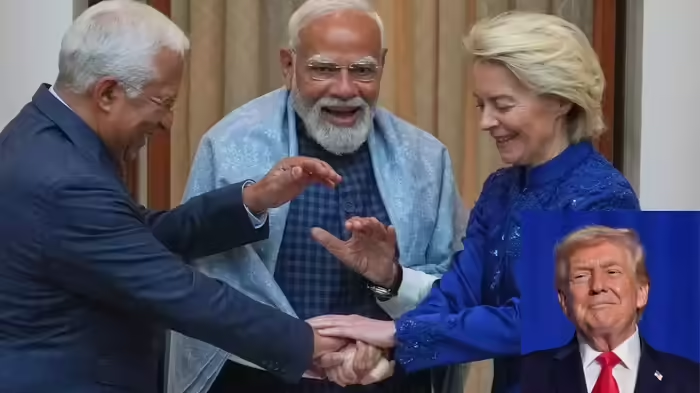
After two decades of negotiations, India has successfully concluded a landmark Free Trade Agreement (FTA) with the European Union, being hailed as the “Mother of All Deals.” This historic agreement marks a decisive shift in global trade dynamics and delivers a clear message to the United States, particularly former President Donald Trump, whose tariff-driven and confrontational trade policies have left allies seeking alternative partners.
Trump Factor and the EU Deal
The deal comes amid growing global disillusionment with U.S. trade policies. U.S. Treasury Secretary Scott Besant expressed disappointment over the EU-India FTA, noting that European nations preferred to diversify their trade and secure stable partnerships, even bypassing the United States. Besant also criticized Europe for prioritizing trade over geopolitical considerations such as the Ukraine conflict and highlighted India’s strategic ties with Russia, including oil imports.
According to South Asian geopolitical analyst Michael Kugelman, “The Trump factor certainly accelerated the finalization of this two-decade-old deal. It goes beyond just mitigating the impact of U.S. tariffs—it strengthens a broad, rapidly growing partnership.”
What This Means for India
The India-EU FTA, covering approximately 25% of global GDP and nearly one-third of world trade, is expected to significantly boost India’s exports of labor-intensive goods, which were heavily impacted by Trump-era tariffs of up to 50%. Key sectors poised for growth include textiles, gems and jewelry, and footwear. In return, the EU will eliminate or reduce tariffs on 96.6% of imports from India’s 27 member countries.
Importantly, sensitive sectors such as India’s dairy and agriculture have largely been excluded, respecting domestic “red lines” and reflecting a politically sensitive, mutually respectful agreement. The deal sends a clear signal: global powers are diversifying away from the instability of U.S. trade policies and securing reliable, stable partners—India has emerged as a major beneficiary.
Canada Joins the Bandwagon
Across the Atlantic, Canada has also strengthened trade ties with India, particularly after Trump’s aggressive statements on energy supplies last year. Canada, a major supplier of crude oil, LNG, and petroleum gas, will now increase exports to India, while India will supply Canada with more refined petroleum products. The agreement was formalized during a meeting between India’s Union Minister Hardeep Singh Puri and Canada’s Energy Minister Tim Hodgson, with both sides emphasizing the need to reject “authoritarian powers exploiting tariffs.”
India’s Strategic Win
India’s rapid agreements with the EU, UK, New Zealand, Oman, and Canada signal its emergence as a stable and reliable global trade partner. Trump-era labels branding India as a “dead economy” or a “tariff hotspot” no longer hold sway. Through these partnerships, India has effectively strengthened its global economic standing while diversifying international trade ties—dealing a strategic blow to U.S.-centric trade dependence.
Discover more from SD NEWS agency
Subscribe to get the latest posts sent to your email.