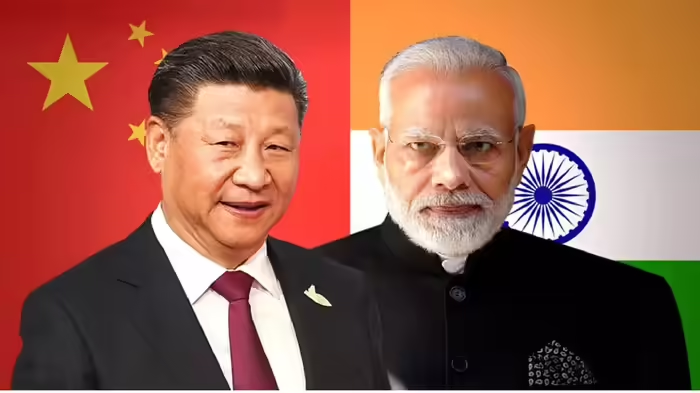
New Delhi: The Indian government is preparing to restore trade ties with China after border tensions have eased, by potentially removing restrictions that required Chinese companies to obtain special security clearance to participate in government projects. These rules, imposed in 2020 following violent clashes in Ladakh, had prevented Chinese firms from bidding on Indian contracts without prior political and security approval.
Step Back or Strategic Move?
According to Reuters sources, the Finance Ministry is working to scrap the registration process entirely, though the final decision rests with the Prime Minister’s Office (PMO). Geopolitical analyst Dr. Brahma Chellaney described the move as India taking a step back, noting that New Delhi has quietly abandoned its earlier demand to restore the pre-2020 status quo in Ladakh. Now, India’s focus is limited to maintaining peace and stability along the border rather than reverting to historical positions.
Why the Restrictions Are Being Eased
Delays in major infrastructure projects and shortages of essential equipment have prompted the move. When the 2020 restrictions were enacted, Chinese state-owned firm CRRC was excluded from multi-crore train contracts. Several government departments, including the power ministry, complained that the ban on Chinese equipment had stalled large-scale projects. A high-level committee chaired by former Cabinet Secretary Rajiv Gauba recommended easing the restrictions to ensure project continuity and safeguard India’s power and infrastructure targets for the next decade.
Market Reactions and Investor Concerns
The announcement of Chinese firms’ potential return has already impacted Indian markets. Shares of BHEL fell by 10.5%, while L&T and other major companies saw declines exceeding 3%. Investors are concerned that renewed Chinese participation could intensify competition for domestic firms.
The U.S. Factor
Experts suggest that India’s shift is partly influenced by the United States. Former President Donald Trump had imposed 50% tariffs on Indian goods, while growing U.S.-Pakistan ties heightened strategic concerns for New Delhi. Amid this international pressure, PM Modi visited China last year, normalizing bilateral relations. Direct flights resumed, and visa rules for Chinese professionals were relaxed. However, India continues to proceed cautiously, and a complete lift on Chinese foreign direct investment (FDI) restrictions has not yet been implemented.
This move underscores India’s delicate balancing act between maintaining strategic autonomy, safeguarding domestic interests, and ensuring economic growth.
Discover more from SD NEWS agency
Subscribe to get the latest posts sent to your email.