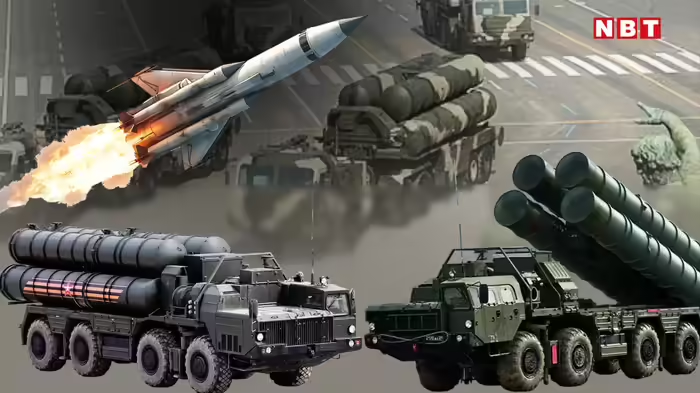
New Delhi: In a significant boost to India’s air defence preparedness, the government has reportedly given approval for the procurement of 288 surface-to-air missiles for the Russian-made S-400 Triumf air defence system. The move is being seen as a major strategic step to strengthen India’s capability to counter aerial threats, especially from hostile neighbours.
The decision comes close on the heels of another major update in India-Russia defence cooperation, as reports suggest that the remaining two squadrons of the S-400 system are expected to be delivered within 2026.
Defence Acquisition Council Approves Procurement
According to reports, the Defence Acquisition Council (DAC), headed by Defence Minister Rajnath Singh, has granted Acceptance of Necessity (AoN) for the purchase of these missiles. The deal is estimated to be worth around ₹10,000 crore.
The missiles are expected to be procured under the Fast Track Procedure (FTP) to ensure timely delivery and immediate strengthening of the armed forces’ stockpile.
Missiles to Cover Short and Long Ranges
The S-400 system is capable of deploying missiles of multiple ranges, including 40 km, 150 km, 200 km and up to 400 km. Under the newly approved procurement plan, India is likely to acquire:
- 120 short-range missiles
- 168 long-range missiles
This ensures India maintains a balanced inventory capable of handling threats at both close and extended distances.
S-400 Missiles: Speed and Strike Capability
The S-400 Triumf system is known for its high-speed interception capability. The missiles can reportedly reach speeds of up to 4.8 km per second, equivalent to Mach 14.
With the ability to track and destroy targets at altitudes up to 30 km, the system is designed to neutralize:
- Fighter jets
- Drones
- Cruise missiles
- Ballistic missiles
- Surveillance and early-warning aircraft
Operational Success Against Pakistan Strengthened Demand
The S-400 system gained major attention after its reported operational role during Operation Sindoor, when India effectively used it to counter Pakistani aerial threats.
Defence experts believe the recent approval reflects the urgent need to ensure that the armed forces maintain sufficient missile reserves after the system proved its effectiveness in real combat conditions.
Target Hit Deep Inside Pakistan
Reports further claim that during Operation Sindoor, India successfully intercepted and destroyed a high-value Pakistani surveillance aircraft deep inside Pakistan’s Punjab province using a long-range S-400 missile.
The target was reportedly hit at a distance of 314 km, forcing Pakistan’s military leadership to shift its aircraft further away, closer to air bases near the Afghanistan and Iran borders.
Pakistan’s Radar Network Allegedly Disrupted
The S-400 systems deployed in India’s Adampur and Bhuj sectors are also believed to have played a critical role in disrupting Pakistan’s radar systems across strategic cities such as:
- Lahore
- Rawalpindi
- Sialkot
- Pasrur
This reportedly weakened Pakistan Air Force’s ability to respond effectively during key moments of heightened tension in May 2025.
Strategic Message in the Region
The approval of the 288-missile deal highlights India’s long-term focus on building an impenetrable air defence shield. With the S-400 capable of intercepting threats at a range of 40 to 400 km, the system is widely viewed as one of the most lethal air defence platforms currently deployed in the region.
The latest development not only strengthens India’s defence posture but also sends a strong strategic message to adversaries, particularly Pakistan, that India is prepared to respond decisively to any future aerial aggression.
Discover more from SD NEWS agency
Subscribe to get the latest posts sent to your email.