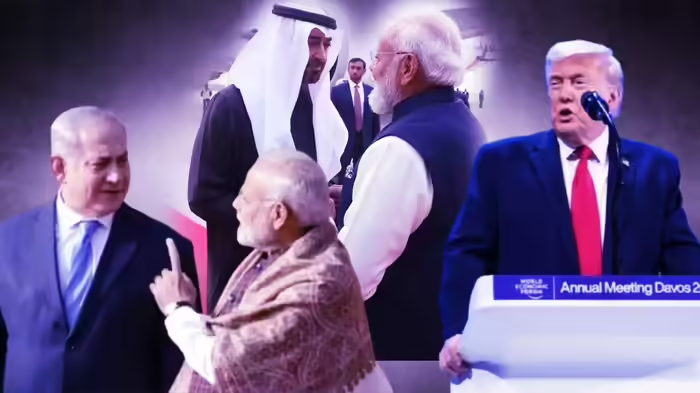
New Delhi: India is carefully preparing its stance on the Gaza peace initiative, taking a broader approach before potentially joining U.S. President Donald Trump’s “Board of Peace” proposal. While Trump has extended an invitation to Prime Minister Narendra Modi to participate, India has not yet confirmed its position, preferring to consult all stakeholders first.
Preparations Ahead of Arab Foreign Ministers’ Meet
India had already planned to host the foreign ministers of Arab countries in New Delhi. On January 31, when the ministers arrive, India intends to gauge their response to Trump’s peace board proposal. Several Arab nations, including Saudi Arabia, Morocco, Egypt, Qatar, Bahrain, and the UAE, have already decided to join Trump’s board. India is keen to understand their perspectives before taking any decision.
Notably, India recently strengthened ties with the UAE through significant trade and defense agreements, enhancing its position in the Gulf amid regional alignments involving Turkey and Pakistan.
Potential High-Level Visits
Speculation suggests that after the Arab ministers’ meeting in Delhi, PM Modi may visit Israel and an Arab nation in February. Reports indicate that Israeli Prime Minister Benjamin Netanyahu has extended an invitation to Modi. While nothing is finalized yet, any such trip is expected to feature Trump’s proposal as a key discussion point.
Trump’s Board of Peace and India’s Calculated Approach
During a gathering in Davos, Switzerland, Trump secured signatures for the charter of the Board of Peace, attended by representatives from countries including Turkey, Qatar, Pakistan, Argentina, Hungary, Bulgaria, Bahrain, Kazakhstan, Kosovo, Armenia, Azerbaijan, Morocco, and Paraguay. Pakistan’s Prime Minister Shehbaz Sharif also attended with Field Marshal Aseem Munir.
India, however, is taking a more measured approach. While Trump presents the board as a peace initiative, there are concerns it could operate parallel to the United Nations, raising uncertainties about its long-term impact. Trump’s simultaneous hardline stance on Iran has also contributed to India’s cautious approach. Consequently, India is deliberately consulting all stakeholders before taking any position, ensuring that any engagement is strategic and inclusive.
Discover more from SD NEWS agency
Subscribe to get the latest posts sent to your email.