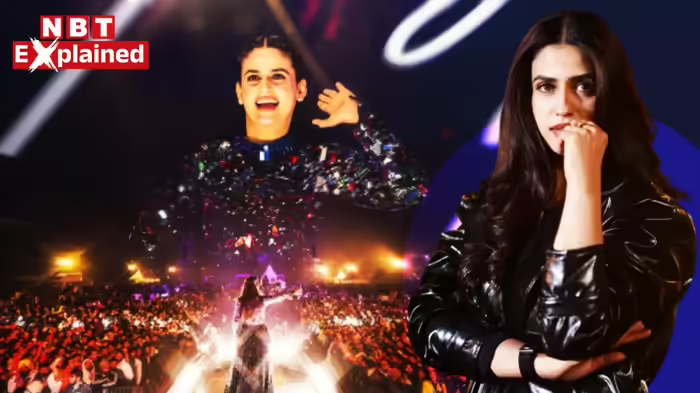
New Delhi: From Pranjal Dahiya to Samantha Ruth Prabhu and Nidhi Agarwal, the year 2026 has begun with disturbing incidents of harassment against female celebrities. These episodes highlight the urgent need to confront and curb such behavior.
Haryana’s Pranjal Dahiya recently made headlines after facing an uncomfortable situation during a live stage performance in Gurugram. Frustrated by an overzealous fan, she reportedly said, “I’m your daughter’s age, uncle—please maintain some control.” The incident quickly ignited a heated debate on social media.
Similar cases have surfaced recently. On 17 December 2025, at a song launch outside Lulu Mall, Hyderabad, actress Nidhi Agarwal was surrounded by an uncontrollable crowd of fans immediately after the event. A few days later, actress Samantha Ruth Prabhu faced a similar ordeal during a store inauguration. These events raise an important question: why do female celebrities have to endure such behavior?
Who is Pranjal Dahiya?
Pranjal Dahiya is an Indian model, dancer, actress, and social media influencer, primarily active in the Haryanvi music industry. Hailing from Faridabad, Haryana, she rose to fame through her dance videos on TikTok and later established a strong presence on Instagram and YouTube.
She began her Haryanvi music journey in 2018, with her biggest hit being “52 Gaj Ka Daman”, featuring singer Renuka Pawar. The song has amassed over 1.7 billion views on YouTube and remains among India’s top-viewed music videos. Other popular songs include “DJ Pe Matkungi,” “Balam Thanedar,” and “Nachungi DJ Floor.” Pranjal currently boasts over 5 million followers on Instagram.
The Psychology Behind Fan Misbehavior
A BBC report cites Dr. Vinay Kumar, former president of the Indian Psychiatric Society and board member of the World Psychiatric Society, explaining the dynamics between fans and celebrities. He describes a “parasocial relationship,” which typically progresses in three stages:
- Casual: Fans enjoy movies or music and relate to celebrities through cultural connections.
- Personal: Fan intensity increases, perceiving the celebrity as a soulmate or godparent figure.
- Pathological: In extreme cases like erotomania, fans may try to touch celebrities, invade their private spaces, or develop the false belief that the celebrity personally knows them. This stage can escalate to stalking or violence.
Crowd Behavior Amplifies Risk
Dr. Kumar further explains that deindividuation occurs in crowds, where individual identity disappears. The absence of personal accountability allows people to act on hidden impulses without fear. Shouting, pushing, or provoking violence becomes easier, turning collective behavior into an aggressive force.
As these incidents continue, the safety and dignity of female performers remain at risk, underscoring the urgent need for better crowd management, security measures, and public awareness.
Discover more from SD NEWS agency
Subscribe to get the latest posts sent to your email.