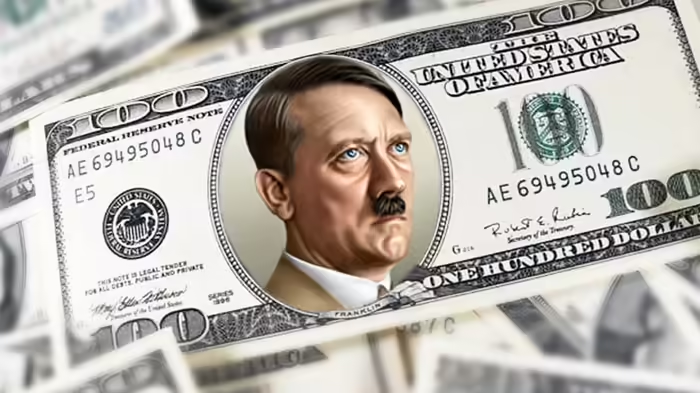
New Delhi: During World War II, Adolf Hitler explored an unusual weapon against Britain — counterfeit money. Alongside guns and bombs, Nazi Germany planned to wage economic warfare by undermining confidence in the British currency. The episode is detailed by Irish economist and author David McWilliams in his book Money: A Story of Humanity.
The idea echoed a belief once expressed by Russian revolutionary Vladimir Lenin, who said in a 1919 interview that the easiest way to weaken a society was to destroy its currency. Lenin argued that flooding an economy with excess money could erode value and destabilize the capitalist system. Hitler, having witnessed Germany’s devastating hyperinflation after World War I, understood how currency collapse could tear apart a nation.
Under a covert mission known as Operation Bernhard, Nazi authorities established a secret counterfeiting facility in Berlin. Skilled printers, artists, and paper specialists — many of them Jewish prisoners selected from concentration camps — were forced to produce forged British pound notes. Though conditions in Nazi camps were brutal, prisoners involved in the operation reportedly received comparatively better treatment, including improved rations and limited access to newspapers and recreation.
The operation produced an estimated £175 million in counterfeit currency, so sophisticated that even the Bank of England was reportedly stunned by the quality. The Nazi plan was to drop the forged notes over British cities to trigger inflation and public panic. However, by the time the notes were ready, Germany’s military position had weakened, and the air operation was never fully executed.
Operation Bernhard remains one of history’s most audacious attempts at economic sabotage — a reminder that modern warfare has long extended beyond the battlefield into the financial system.
Discover more from SD NEWS agency
Subscribe to get the latest posts sent to your email.