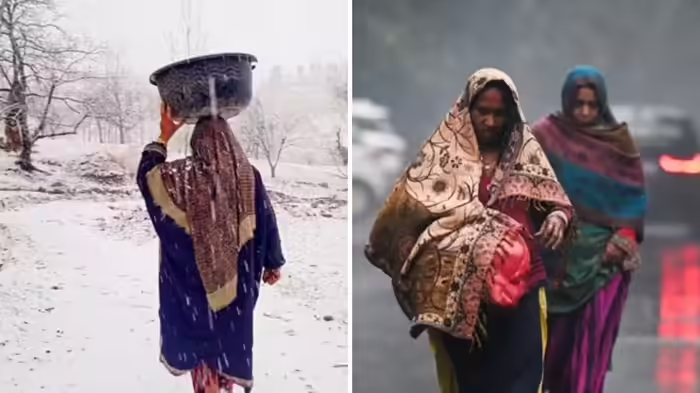
The weather across India is set to undergo a major shift after over a century, with authorities issuing warnings of heavy rainfall and snowfall in ten states this month.
According to the Meteorological Department, two western disturbances are becoming active over the Western Himalayas. These systems are expected to bring heavy snowfall and rainfall in parts of the region on 23 January. Additionally, between 22 and 24 January, northwestern plains of India are also likely to experience rainfall.
This winter, the Himalayas have witnessed one of the driest periods since 1901, with extremely low precipitation recorded across key states. Experts warn that these western disturbances could end this prolonged dry spell. The Meteorological Department reports that northern states like Uttarakhand have seen no rainfall so far this winter, while Himachal Pradesh has recorded its sixth lowest December rainfall since 1901. Jammu and Kashmir have also experienced reduced snowfall and rainfall.
Satellite data from the International Centre for Integrated Mountain Development (ICIMOD) indicate that the Himalayan region is witnessing the lowest snowfall in the past two decades, marking the weakest snow season in 23 years. Experts caution that if global temperatures continue to rise, snowfall seasons may become even shorter in the future.
State-wise Forecast:
- Until 21 January: Light to moderate rainfall and snowfall are expected at scattered locations in Jammu & Kashmir, Ladakh, Himachal Pradesh, and Uttarakhand.
- 22–24 January: Heavy rainfall and snowfall are likely over larger areas of the Western Himalayas. Uttarakhand may experience significant rainfall on 23 and 24 January, with the heaviest snowfall expected on 23 January.
- 22–24 January: Scattered light to moderate rainfall is also expected in Punjab, Haryana, Chandigarh, Uttar Pradesh, and Rajasthan, with thunderstorms predicted in Delhi.
Impacts of Delayed Snowfall:
Delayed snowfall can have serious consequences for glaciers, rivers, and water flow. Snow that falls in early December and January typically remains frozen longer due to low temperatures, keeping the ground moist and gradually feeding rivers. However, late snowfall combined with rising temperatures in late January to March leads to faster melting, reducing soil moisture and causing sudden increases in water flow, which can affect agriculture and water management.
Discover more from SD NEWS agency
Subscribe to get the latest posts sent to your email.