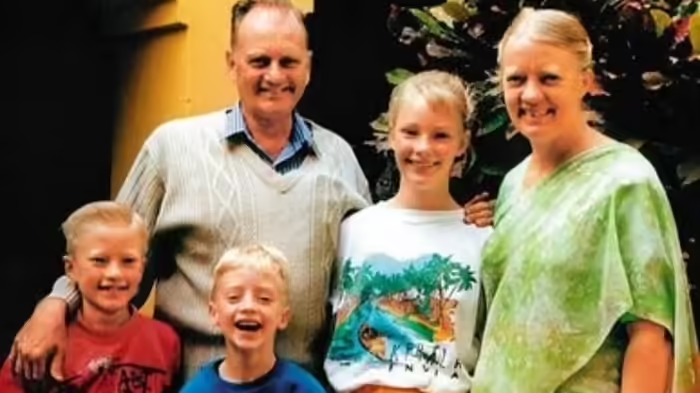
On January 22, 1999, a violent mob in Khandamal district of Odisha set Australian missionary Graham Staines and his two young sons, Philip (10) and Timothy (6), on fire while they were asleep in their jeep. The brutal attack, carried out under the leadership of Dara Singh, sparked nationwide and international outrage. Then-President K.R. Narayanan condemned the killings, calling them among the “dark deeds of the world.”
Who Was Graham Staines?
Graham Staines arrived in India in the 1960s with the Evangelical Missionary Society of Mayurbhanj. He dedicated over 34 years to providing care and support for leprosy patients in Odisha. In 1983, he married fellow Australian missionary Gladys Staines, and the couple had three children. They established their home in Baripada, Mayurbhanj, as a center for aiding leprosy patients.
The Night of January 22, 1999
On that night, Staines and his sons were returning from a Christian gathering in a forest camp at Manoharpur, while Gladys and their daughter Esther were in Ooty. A mob of approximately 50 men, armed with sticks and weapons and reportedly associated with Bajrang Dal, attacked the camp. The mob set the jeep ablaze with Staines and his sons inside. The attack was reportedly linked to tensions over alleged religious conversions in the area.
Global Condemnation
The horrific incident drew worldwide condemnation. International media and human rights organizations expressed concern for the safety of missionaries in India. President K.R. Narayanan remarked that killing a man who had devoted his life to leprosy patients was a stark deviation from India’s traditions of tolerance and humanity.
Legal Proceedings
Following the attack, an FIR was registered on January 23, 1999, under Sections 147, 148, 435, 436, 302, 149 of the IPC, and Sections 25 and 27 of the Arms Act. Initially, 49 individuals were arrested, but Dara Singh remained at large. The case was taken over by the state Crime Branch and later transferred to the CBI, which filed its case on March 29, 1999. Dara Singh was finally arrested on January 31, 2000, in a forest in Khandamal.
Between 1999 and 2000, 37 of the 50 accused were acquitted within three years. A CBI court in Bhubaneswar sentenced Dara Singh to death and 12 others to life imprisonment in September 2003. The Odisha High Court later acquitted 11 of the 12 convicts, except for Mahendra Hembram, who was released from Khandamal Jail on April 16 last year for good behavior. Hembram claimed he had been falsely implicated for opposing religious conversions and cow slaughter.
Appeals and Current Status
Dara Singh remains in prison. In May 2005, the Odisha High Court commuted his death sentence to life imprisonment, a decision upheld by the Supreme Court in January 2011. One juvenile accused at the time was tried separately and released from custody in 2008.
On March 19, 2025, the Supreme Court directed the Odisha government to decide on Dara Singh’s plea for remission after 24 years in jail, noting his claims of remorse and the fact that he had committed the crime in the heat of youth.
The murder of Graham Staines and his sons remains a dark chapter in India’s history, symbolizing the tragic consequences of communal intolerance and violence.
Discover more from SD NEWS agency
Subscribe to get the latest posts sent to your email.