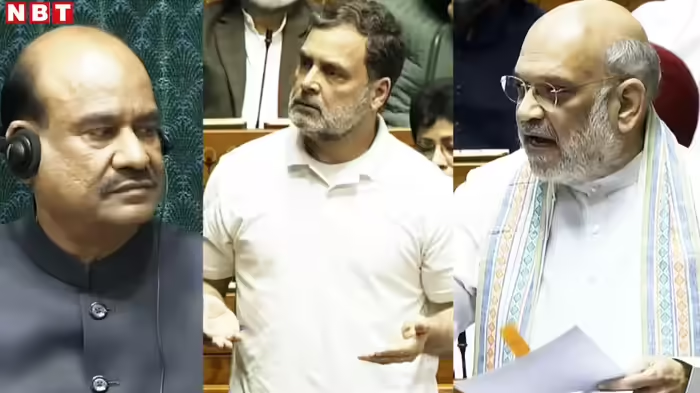
New Delhi: The Budget Session of Parliament has witnessed repeated uproars, the latest triggered when Leader of Opposition Rahul Gandhi raised the China-Doklam issue in the Lok Sabha. During the discussion on the President’s address, Rahul Gandhi cited excerpts from former Army Chief General M.M. Naravane’s unpublished book, alleging that Chinese tanks had been stationed near the Indian border at Doklam.
The ruling party immediately objected, and Speaker Om Birla stopped Rahul Gandhi from reading the excerpts, citing parliamentary procedure. During the heated exchange, Minister of Home Affairs Amit Shah also referenced Rules 349, 358, and 389, calling for action against the Leader of the Opposition. Here’s a breakdown of what these rules entail.
Rule 349: Maintaining Decorum During Proceedings
Rule 349 governs the conduct of MPs during parliamentary debates and procedures. Clause (i) explicitly states that “no member shall read any book, newspaper, or letter unrelated to the business of the House.”
Under this rule, MPs cannot cite external material unless it is directly relevant to the ongoing discussion and accepted under parliamentary traditions. The purpose is to prevent the use of unverified, unpublished, or politically sensitive sources during debates.
Key provisions include:
- Members may not read unrelated books, newspapers, or letters during proceedings.
- MPs must communicate with the Speaker when making points.
- Permission from the Speaker is required when entering, exiting, sitting, or standing in the House.
Rule 358: Speaking Order and Right to Reply
Rule 358 regulates the order in which MPs speak during discussions on motions, resolutions, or bills. After the member who introduces a proposal has spoken, other MPs may speak in the sequence determined by the Speaker. Members are generally allowed to speak only once on a motion, except for the right to reply or with explicit permission from the Speaker.
Rule 389: Speaker’s Discretion
Rule 389 gives the Lok Sabha Speaker authority to handle situations not explicitly covered by existing rules. The Speaker may regulate proceedings and issue directives to ensure smooth functioning of the House, especially when dealing with novel or unforeseen circumstances.
Application of Rule 349 to Rahul Gandhi
During the discussion on the President’s address, Rahul Gandhi attempted to read excerpts from General Naravane’s unpublished book Four Stars of Destiny. The ruling party objected, arguing that citing an unpublished source violated parliamentary rules. Rahul Gandhi then referred to a magazine article based on the book, which also drew objections.
Speaker Om Birla instructed Rahul Gandhi, citing Rule 349(i), that he could not read excerpts unless the material was formally authenticated or presented to the House. Defence Minister Rajnath Singh and Home Minister Amit Shah supported this position, emphasizing that unpublished content could not be cited. The opposition, however, argued that references to magazines and external sources have been made in past debates.
Does Rule 349 Ban Citations from Books and Newspapers?
Experts clarify that Rule 349 does not impose a blanket ban on citing books or newspapers. MPs may reference such material as long as it is directly relevant to the discussion, does not violate parliamentary privilege or national security, and aligns with established parliamentary conventions. The Speaker retains the final authority to accept or reject any reference.
Importance of Rule 349
While often overlooked, Rule 349 plays a crucial role in maintaining order and decorum in parliamentary proceedings. It ensures that discussions in the House are based on verified, relevant information, especially when matters involve national security, unpublished documents, or politically sensitive sources. The rule empowers the Speaker to regulate the debate and uphold the dignity of the House.
Discover more from SD NEWS agency
Subscribe to get the latest posts sent to your email.