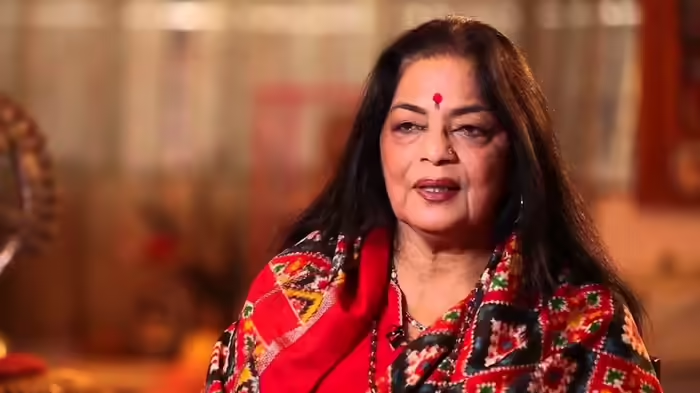
New Delhi: Padma Bhushan awardee Uma Sharma, a senior Kathak dancer and disciple of the legendary Pandit Shambhu Maharaj, has long been a torchbearer of Hindustani classical dance. At 83, she continues to orchestrate the Swami Haridas-Tansen Music & Dance Festival in Delhi, ensuring that the legacy of classical music and dance remains alive for generations. In an exclusive interview with Alok Paradkar, she shares her candid views on the evolving landscape of Kathak and classical music.
Preserving the Purity of Classical Music
On the changes in Hindustani classical music, Sharma remarked: “I don’t believe classical music needs radical transformation. It is a heritage that must be carefully preserved. Its ragas and compositions should be safeguarded with utmost respect. While I encourage young artists, my advice has always been: modernity in attire, lifestyle, or thoughts is fine, but the essence of music must remain untouched. Its purity must be preserved like a sacred inheritance.”
Kathak’s Contemporary Experimentation
Sharma voiced concern over the modern experiments in Kathak: “I get disappointed seeing what some dancers are doing these days. Even Pandit Birju Maharaj agreed that many contemporary artists are modernizing Kathak excessively, experimenting in ways that dilute its essence. Kathak today is not what it used to be. Whenever I perform or teach, I strive to maintain its purity. My guru, Pandit Shambhu Maharaj, taught me the art of expressing bhav (emotion) through seated demonstrations. Among classical dance forms, Kathak is changing the most.”
Swami Haridas-Tansen Music & Dance Festival: A Legacy of Over Three Decades
The festival, which began nearly 35 years ago in Vrindavan under Gopal Goswami Ji, found a permanent home in Delhi after the founder’s health declined. With support from the Sri Ram Centre for Performing Arts and philanthropist Shiv Nadar, Sharma ensured that the festival continued, bringing together legendary artists and young audiences alike. This year marked its 27th edition in Delhi.
Sharma shared: “From the very first years, the audience was small. I remember Pandit Ravi Shankar telling me that a day would come when thousands would attend—and he was right. Today, the hall is packed, mostly with young listeners, which reassures me about the future of classical music.”
Passing on the Kathak Tradition
Uma Sharma has trained under Pandit Shambhu Maharaj of the Lucknow Gharana and Pandit Sunder Prasad of the Jaipur Gharana. She remains committed to teaching the next generation, ensuring that Kathak is passed on in its traditional form. Her school continues to impart rigorous classical training in line with age-old practices.
Expanding Kathak Through Poetry and Bhakti
Sharma has enriched Kathak performances with poetry from classical to modern eras, including Surdas, Tulsidas, Keshavdas, Mirza Ghalib, Harivansh Rai Bachchan, and Gopaldas Neeraj. She has performed at historic venues, paying homage to these poets through her dance and even presented the works of former Prime Minister Atal Bihari Vajpayee on stage.
Uma Sharma’s vision underscores a delicate balance: respecting tradition while inspiring young artists, ensuring that Kathak and Hindustani classical music remain both timeless and relevant.
Discover more from SD NEWS agency
Subscribe to get the latest posts sent to your email.