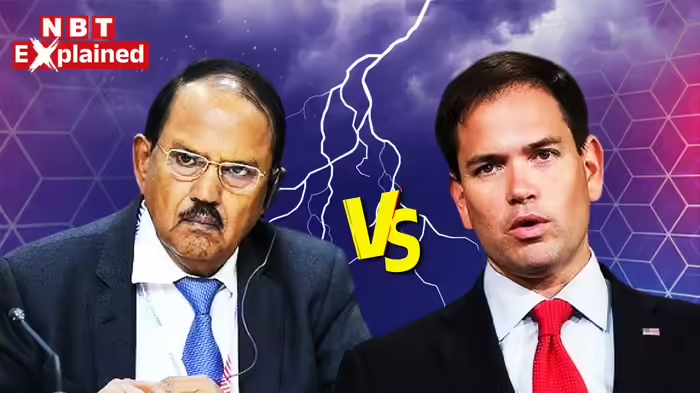
New Delhi: A high-level meeting between India’s National Security Adviser Ajit Doval and U.S. Secretary of State Marco Rubio last year played a key role in easing tensions between New Delhi and Washington after a sharp tariff dispute, according to a Bloomberg report.
Relations between the two countries had deteriorated after U.S. President Donald Trump imposed 50% tariffs on certain Indian goods and publicly criticized India’s trade practices. The situation improved recently after the U.S. reduced those tariffs to 18%, a move seen as a step toward stabilizing ties.
Citing officials in New Delhi familiar with the private discussions, the report said the meeting took place in early September, shortly after Prime Minister Narendra Modi held talks in Tianjin with Chinese President Xi Jinping and Russian President Vladimir Putin — optics that reportedly unsettled Washington.
According to the report, Modi dispatched Doval to the U.S. capital with a message aimed at reopening dialogue and resetting strained relations. During the talks, Doval is said to have conveyed that India was willing to resume negotiations but would not yield to pressure from the Trump administration.
He reportedly told Rubio that India would not be intimidated by public criticism and was prepared to wait out the remainder of Trump’s term if necessary. At the same time, Doval emphasized that New Delhi wanted both sides to move past the hostility and requested that U.S. leaders tone down public attacks to allow diplomacy to recover.
The report said India had been particularly angered by Trump’s remarks describing India as a “high-tariff dead economy” and by accusations that Indian purchases of Russian oil were financing Moscow’s war in Ukraine.
Signs of de-escalation emerged soon after the meeting. On September 16, Trump called Modi to wish him on his birthday and praised his leadership — a gesture diplomats viewed as a reset signal. By the end of the year, the two leaders had spoken several more times as negotiators worked toward a tariff reduction framework.
A U.S. State Department spokesperson declined to comment on the details of private diplomatic conversations, citing standard protocol. Earlier this week, Trump announced that he had reached a trade understanding with Modi that would lower tariffs on Indian goods to 18%, a rate reportedly below that applied to many comparable Asian exporters.
The episode highlights the fragility — and resilience — of India–U.S. ties, where strategic cooperation continues alongside sharp trade disagreements, managed through quiet but consequential diplomacy.
Discover more from SD NEWS agency
Subscribe to get the latest posts sent to your email.