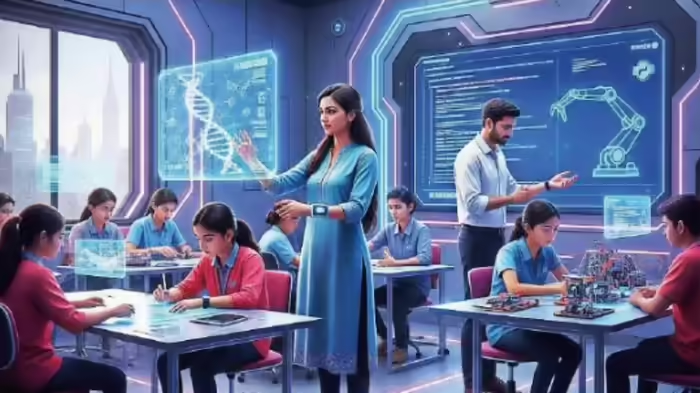
New Delhi: In today’s fast-evolving world, companies value skills over degrees. The digital revolution and rise of artificial intelligence (AI) are reshaping the way we work, demanding creativity, continuous learning, and adaptability. The pressing question remains: Is India’s education system ready to keep pace with these changes?
Lessons from the 1990s: The current transformation echoes the 1990s computer revolution. Back then, computer education in colleges was almost nonexistent. Institutions like NIIT and Aptech filled this skill gap, training millions in programming and IT fundamentals, creating India’s first digital workforce. The message was clear: skills can outshine degrees—but only if paired with a solid educational foundation.
Skills Alone Are Not Enough: While skills open doors, education builds the path. Those with strong academic grounding—capable of critical thinking and problem-solving—thrive, whereas individuals relying solely on short courses often find their skills becoming obsolete. The debate, therefore, is not “degrees vs skills”, but how degrees and skills can complement each other.
The Current Landscape: Today’s digital economy is even broader. AI, data analytics, and advanced technologies now touch every sector. Emerging roles like data scientists, prompt engineers, UX designers, and cybersecurity analysts reflect this shift. Companies no longer ask what you studied—they ask, “What can you do?” Government initiatives like Skill India Mission and Digital India are steps in the right direction, but the gap between education and employable skills remains wide.
Policy and Institutions: While NEP 2020 emphasizes flexible learning and lifelong education, its impact is limited. Universities have yet to significantly update curricula, adopt new assessment methods, or reskill faculty to meet modern requirements.
A Call for Change: Just as NIIT pioneered computer skills in the 1990s, a new generation of digital skill institutions and edtech platforms can play a transformative role today. However, lasting change depends on universities like IITs, IIITs, and other higher education institutions redesigning their courses and teaching methods so that students do not need external skill centers to remain relevant. The challenge of the next decade will be integrating education and skills seamlessly.
The Philosophical Perspective: Education is not static; it must evolve with society. India needs universities that sense societal changes and adapt proactively, creating a learning ecosystem that nurtures both knowledge and practical skills.
The Way Forward: Many institutions today remain rigid compared to the pace of change in the world. Outdated curricula and slow adaptation risk leaving students unprepared. Like in the 1990s, when new institutions unlocked the doors to the tech era, India now stands at a similar crossroads. Skills are crucial for a changing world, but sustainable progress rests on the twin pillars of education and understanding.
Discover more from SD NEWS agency
Subscribe to get the latest posts sent to your email.