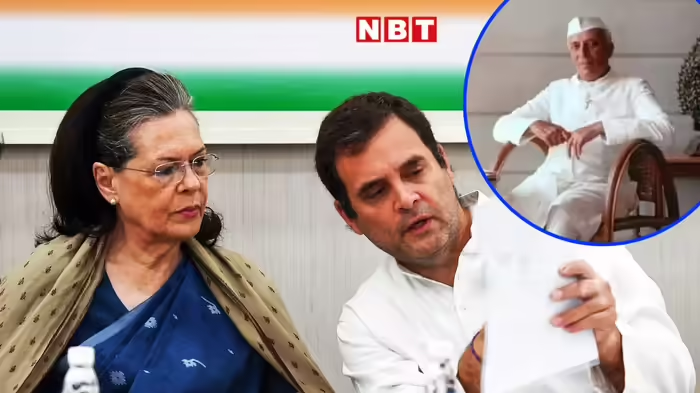
New Delhi: The Congress party has landed itself in hot water over 51 cartons of documents related to former Prime Minister Jawaharlal Nehru, which have not yet been returned. The central government has now directly questioned Congress leader Sonia Gandhi on why these papers, handed to the family in accordance with legal procedures, have not been returned to the Prime Minister Museum and Library (PMML).
Shekhawat Demands Answers
Union Minister for Culture and Tourism Gajendra Singh Shekhawat criticized Congress and tweeted, “The 51 boxes of documents related to Jawaharlal Nehru were taken back by the Gandhi family from PMML (then NMML) in 2008. These documents were legally handed over to the family, and their records and catalogues exist at PMML. The key question is why these documents have not yet been returned, despite multiple reminders, especially in January and July 2025. I respectfully ask Sonia Gandhi: What is being hidden? The arguments for not returning the documents are inconsistent and unacceptable.”
Congress Gives Government an Opening
Shekhawat highlighted that Sonia Gandhi had previously acknowledged in writing that the documents were in her possession and had promised cooperation in returning them. “It should be known to Jairam Ramesh! Sonia Gandhi had explicitly accepted in writing that these documents were with her and had assured cooperation, which is still awaited,” Shekhawat added.
The controversy escalated after Congress leader Jairam Ramesh suggested that the government should apologize, giving the administration a chance to clarify the facts about the Nehru documents.
Documents Not ‘Missing’
Shekhawat emphasized that the Nehru papers are not missing. “‘Missing’ would imply their location is unknown. In this case, it is known where the papers are and who holds them. The question remains: why are such historically significant documents kept outside the public archives? These are not private family papers—they are vital national records linked to India’s first Prime Minister. Such documents should reside in the public archives, not in closed rooms,” he said.
The government’s stance makes it clear that the Nehru papers should be part of India’s national archival heritage, accessible to scholars and the public, rather than being held privately.
Discover more from SD NEWS agency
Subscribe to get the latest posts sent to your email.